Luxury camping
Experience Luxury Camping in the Lake District
Luxury camping sits a step below luxury glamping and a long way above a tent pitch. Camping cabins, serviced pitches, and what the extra money buys on a Cumbrian campsite.
TL;DR
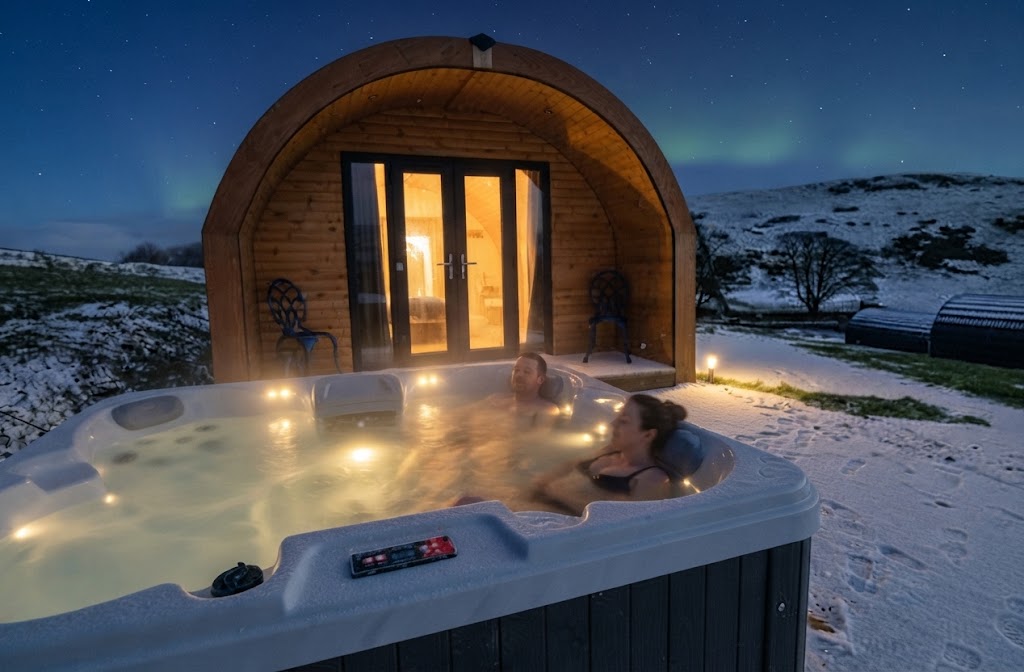
- Luxury camping means an upgraded campsite experience — camping cabins, serviced pitches, heated facilities — rather than a private hot tub.
- Camping cabins run £95–£180 a night, between a tent pitch and a luxury glamping pod.
- The site matters more than the unit at this level: heated shower blocks, a shop, hard standing and drainage.
- Cumbria's best luxury campsites sit around Coniston, Ullswater, the Duddon Valley and the southern lakes.
- Choose luxury camping over luxury glamping if you want facilities and value rather than seclusion.
Exploring Luxury Camping Options
Top Luxury Camping Sites in the Lake District
Luxury camping is a slightly awkward category because it means two different things depending on who is selling it. At one end it describes an excellent campsite where you pitch your own tent — hard standing, heated facilities, drainage that works. At the other it describes supplied accommodation on a campsite: camping cabins, camping pods, sometimes safari tents.
Both matter in Cumbria, and for the same reason. This is one of the wettest inhabited parts of England, with Seathwaite in Borrowdale recording around 3,300mm of rain a year. A campsite with poor drainage and an unheated shower block is genuinely grim in October. A campsite with hard standing, a covered washing-up area and underfloor heating in the facilities block is a different holiday for £15 a night more.
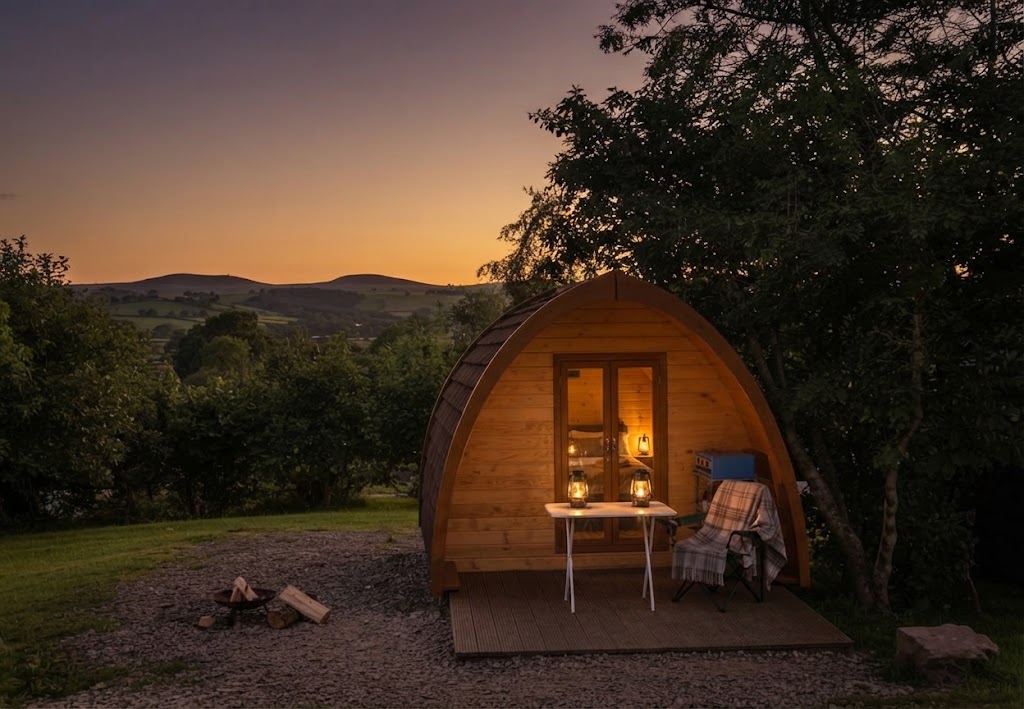
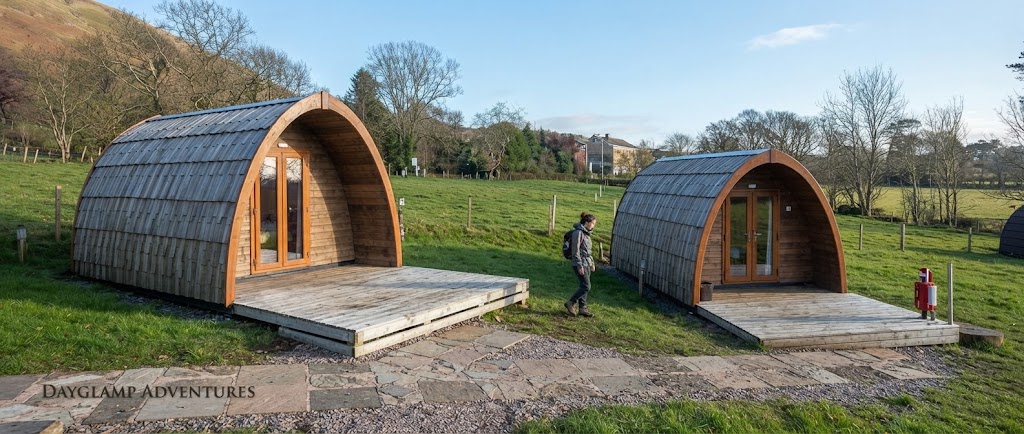
Thornfield Camping Cabins is representative of the supplied-accommodation end. The camping cabin model is simple: a timber cabin on a campsite, with beds, lighting, power and heat, but generally no bathroom or kitchen. You use the site's facilities. It is a step below a glamping pod on specification and a substantial step above a tent.
What a camping cabin gives you:
- A solid roof and insulated walls, so weather is irrelevant
- Real beds rather than mats
- Mains power and lighting
- A heater you control
- A lockable door
- Nothing to pitch and nothing to pack away wet
What it does not give you: a bathroom, a kitchen, or much floor space. You are still using the campsite, which is why the quality of that campsite matters more than the cabin does.
Comparing Luxury Camping Sites
| Feature | Why it matters here | Adds to the nightly rate |
|---|---|---|
| Heated shower and toilet block | Cumbrian mornings. Non-negotiable | £5–£10 |
| Hard standing or good drainage | Prevents a swamp by day three | £5–£10 |
| Covered washing-up and camp kitchen | You will cook in rain at least once | £3–£8 |
| On-site shop | Village shops close at five | £0–£5 |
| Laundry with a dryer | The single most useful facility on a wet week | Pay per use |
| Electric hook-up | Charging, and a fan heater in a tent | £5–£10 |
| Drying room | Very rare. Book it if you find it | £5–£10 |
| Camping cabins or pods available | Fallback if the weather turns properly bad | — |
Where the good sites are: Coniston and the Torver area, Ullswater and Pooley Bridge, the Duddon Valley, Great Langdale, the Lyth and Winster valleys, and the southern lakes towards Newby Bridge. Great Langdale in particular has campsites in positions no glamping site could ever be built in, which is a real argument for camping over glamping.
Understanding the Lake District
What Makes the Lake District Unique?
England's largest national park covers 2,362 square kilometres of Cumbria. It holds sixteen major lakes, several hundred tarns, 214 fells catalogued by Alfred Wainwright, and the country's highest ground at Scafell Pike, 978 metres. UNESCO inscribed the whole cultural landscape as a World Heritage Site in 2017, citing the interaction between farming, industry and Romantic-era ideas about landscape.
What makes it distinctive for camping specifically:
- Density. Lake shore, valley floor, open fell and oak woodland all within a short drive.
- Access rights. Extensive open access land and roughly a thousand kilometres of public rights of way.
- Campsite positions. Because campsites predate modern planning restrictions, several occupy spots that could not be developed today.
- Weather. Which is a genuine feature rather than a drawback, provided your accommodation copes.
- Culture. Wordsworth at Grasmere, Beatrix Potter at Near Sawrey, Ruskin above Coniston.
Visit Lake District, the official destination management organisation, publishes the events calendar, travel updates, accessible route guides and seasonal closures. It is free and considerably more current than any printed guide.
Planning Your Visit to the Lake District
Timing, for camping in Cumbria:
- April. Sites reopening, cold nights, cheap. Cabins fine, tents cold.
- May to June. The best of the year. Driest weeks, longest evenings, prices moderate.
- July to August. Warmest and busiest. Book well ahead. Thundery afternoons are common.
- September. Excellent, especially the second half. Water still warm, sites emptying.
- October. Cabins and pods only, really. Beautiful and wet.
- November to March. Most campsites close. A handful stay open with pods and cabins.
Getting here: M6 junctions 36, 40 and 44; Oxenholme and Penrith on the West Coast Main Line; the 555 and 508 buses for onward travel. Inside the park, average driving speeds fall to around 30km/h, so plan fewer things further apart than you think.
Practical planning notes for Cumbria specifically. Shop once, properly, in Kendal, Penrith or Keswick. Check the Met Office mountain forecast rather than a town forecast for anything above 400 metres. Book popular trailhead parking mentally as "arrive before nine". And accept that at least one day will be written off by weather, so keep an indoor option in reserve.
Amenities and Activities
Luxury Campsite Amenities
What separates a luxury Cumbrian campsite from an ordinary one, in order of how much it improves the week:
- A laundry with a working dryer. On a wet week this is worth more than everything else combined.
- Heated shower block with reliable hot water and enough cubicles for the site's capacity.
- Hard standing or genuinely well-drained grass.
- Covered outdoor cooking and washing-up area.
- A shop selling milk, bread, firewood and gas.
- Camping cabins or pods as an option, or as a fallback.
- Electric hook-up on pitches.
- Family facilities: baby-changing, family shower rooms, a play area.
- Dog provision: an enclosed area, an outside tap.
- EV charging, increasingly common and useful in a rural county.
Camping cabins at sites like Thornfield fit into this by giving you a weatherproof base while still using those shared facilities. That is a sensible trade for many people: you get the dry bed and the site's laundry, and you pay half what a fully en-suite glamping pod costs.
Exciting Lake Activities
Lake activities available from a Cumbrian campsite:
- Wild swimming. Coniston Water, Crummock Water, Derwentwater at Calfclose Bay, Rydal Water, Ullswater's eastern shore.
- Kayaking and paddleboarding. Hire on all the main lakes from May to September. Early morning is flattest.
- Sailing and dinghy hire. Windermere, Coniston and Bassenthwaite.
- Steamers and launches. Ullswater, Windermere and Coniston. All useful as one-way walking transport.
- Ghyll scrambling. Stickle Ghyll in Langdale, Church Beck at Coniston. Guided sessions widely available and better than going alone.
- Fishing. Permits available locally; pike in Windermere, trout in the tarns.
- Rowing. Traditional wooden boats for hire at Coniston and Derwentwater.
Water temperatures peak in mid-August at 16 to 19°C and bottom out near 5°C in February. Boat and board hire is broadly a May-to-September business. The Outdoor Swimming Society publishes free safety guidance which is worth ten minutes before your first swim, since cold water shock affects strong swimmers and Cumbrian lakes are deep and cold well into summer.
Booking and Costs
Understanding the Cost of Luxury Camping
| Option | Low season | Peak | You get |
|---|---|---|---|
| Basic tent pitch | £18–£28 | £28–£40 | Grass, a tap, a shower block |
| Serviced pitch, hook-up, hard standing | £28–£40 | £40–£55 | Power, drainage, better position |
| Camping cabin | £75–£110 | £120–£180 | Solid roof, real bed, heat, lock |
| Camping pod, standard | £90–£125 | £155–£200 | Bed made up, kettle, fridge |
| Ensuite pod | £120–£170 | £200–£260 | Private bathroom, kitchenette |
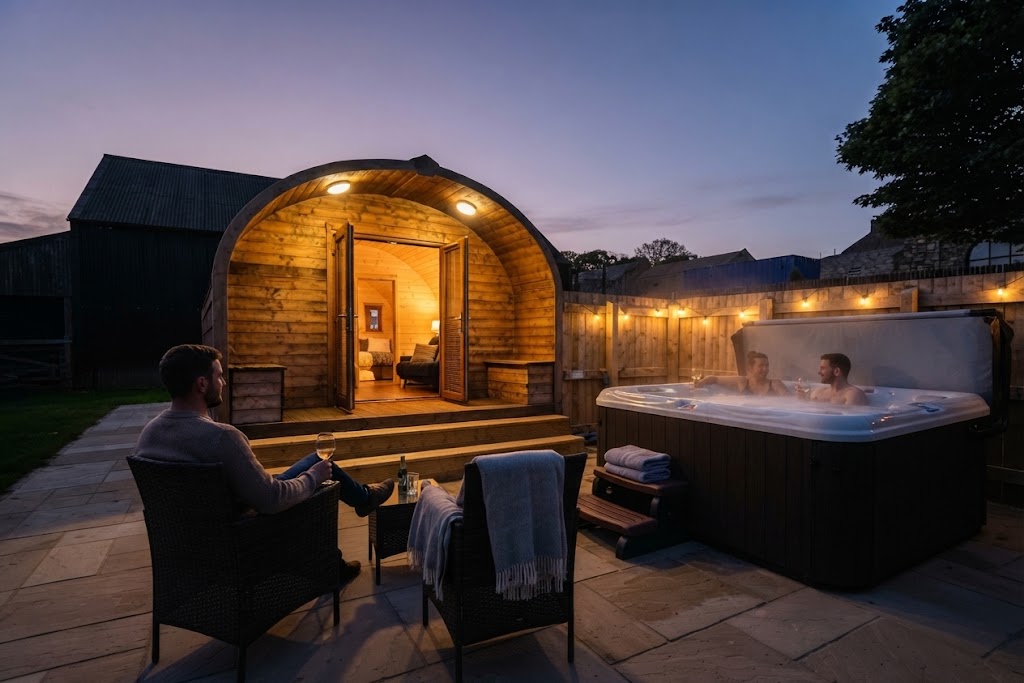
| Luxury pod with hot tub | £175–£250 | £300–£400 | Tub, privacy, low unit count |
The step worth paying for depends on the weather you get, which you cannot know. Our practical advice: for May to September, a serviced pitch or a camping cabin on a good site is excellent value. For October to April, go to a pod — the insulation and the heating are worth the difference. And if the trip is short and the occasion matters, jump straight to luxury glamping and stop optimising.
Factors affecting cost, beyond the accommodation type: season, weekend versus midweek, length of stay, hook-up, dogs, and whether the site is inside the national park boundary or just outside it. Sites a few miles beyond the boundary are frequently 20% cheaper for a fifteen-minute longer drive.
How to Book Your Luxury Camping Experience
- Choose the season, then the accommodation type. A cabin in November beats a tent in November by a wide margin.
- Judge the site before the unit. Facilities, drainage and laundry matter more than the cabin's fittings.
- Check what is included: bedding, towels, firewood, gas, hook-up.
- Check the open season. Many Cumbrian campsites close November to March.
- Ask about pitch or cabin position. Distance from the block, the road and the bins all matter.
- Book direct through the site's own system. Established campsites rarely benefit from platforms.
- Read the group policy if you are travelling as adults. Many family sites restrict all-adult bookings.
Where camping cabins and pods differ from tent pitches in booking terms: minimum stays. A pitch is often available for a single night; a cabin or pod usually wants two, and three over bank holidays. Deposits are also more common for supplied accommodation — typically 25 to 30%, with the balance two to four weeks out.
Our overall position on luxury camping in the Lake District. It occupies a genuinely useful middle ground. You get a weatherproof bed and good facilities for roughly half what a luxury glamping unit costs, and you get access to campsite positions in Langdale, Wasdale and Great Langdale that no glamping operator will ever be allowed to build in. What you give up is privacy and a bathroom of your own. For walkers, that is usually the right trade. For a romantic two-nighter, it is not. Compare with cheap camping pods at the value end and luxury glamping at the top.
Questions people ask
What is the difference between luxury camping and glamping?
Overlapping, with different emphasis. Glamping means the shelter is supplied and furnished. Luxury camping usually means an excellent campsite — heated facilities, hard standing, drainage, a shop — whether you are in a supplied cabin or your own tent. Luxury camping is about the site; luxury glamping is about the unit.
What is a camping cabin?
A simple timber cabin on a campsite: a bed platform or beds, a table, lighting, power and heating, but usually no bathroom or kitchen. It sits between a camping pod and a lodge in specification, and between a tent pitch and a glamping pod in price.
Is posh camping worth it over a normal campsite?
In Cumbria, generally yes, because the weather punishes bad drainage. A well-run site with hard standing, heated facilities and a covered washing-up area transforms a wet week. That upgrade costs £10 to £20 a night on a pitch and is the best value in Lakeland camping.
Can you camp in luxury in winter in the Lake District?
In a cabin or pod, yes — they are insulated and heated. In a tent, technically yes and practically unpleasant. Many campsites close from November to March, so check the season before you plan anything between those months.
How much does luxury camping cost in the Lake District?
Serviced pitch £35–£55 a night. Camping cabin £95–£180. Camping pod £95–£240. Luxury pod with a hot tub £240–£400. Each step up buys something specific rather than just comfort in general.