Pillar guide
Discover Glamping in the Lake District, UK: A Luxurious Outdoor Experience
One long read covering the whole field: what glamping is, why Cumbria suits it, which sites get named again and again, and what a night actually costs once the extras land.
TL;DR
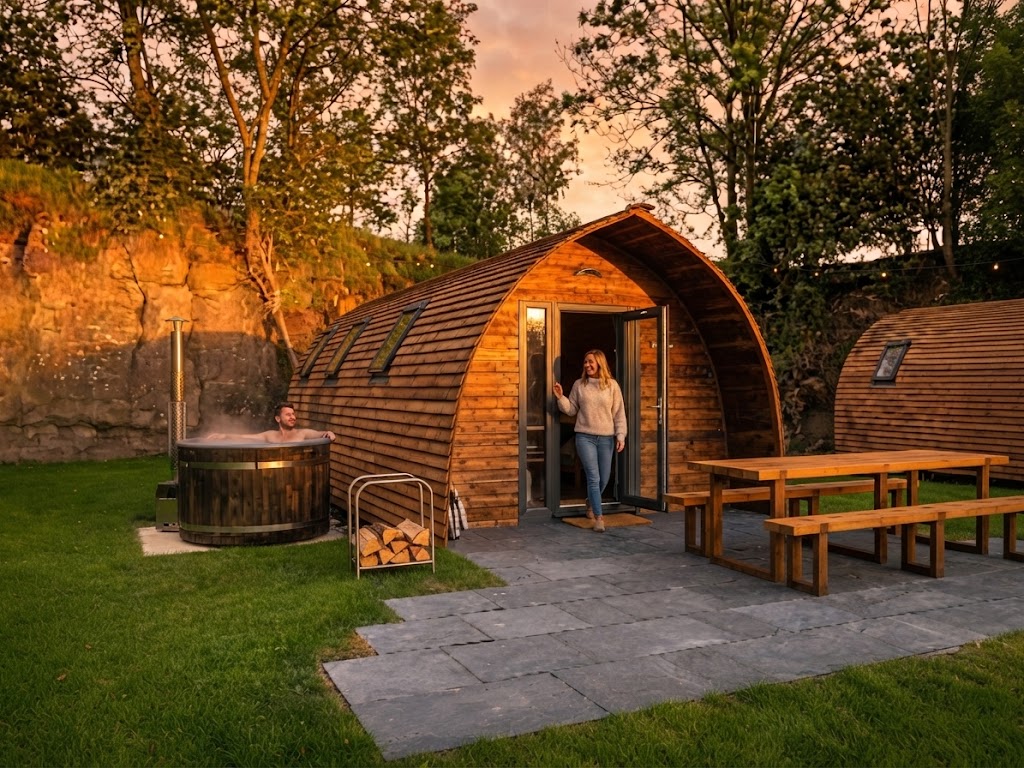
- Glamping in the Lake District means a bed, a roof and mains electricity in a field with a view — usually a timber pod, sometimes a hut, yurt or safari tent.
- Expect £95–£145 for a basic pod and £220–£400 once a private hot tub is included.
- Eden Heights Glamping sits in the Eden Valley; Inside Out Camping and Glamping works the canvas end of the market. Canopy & Stars lists the design-led properties.
- Keswick suits walkers. The Eden Valley suits anyone who wants dry weather and space.
- May, June and September beat July and August on price, crowds and often weather.
Introduction to Glamping in the Lake District
What is Glamping?
Glamping is camping that has had its worst edges filed off. The word is a portmanteau of glamorous and camping, and it describes accommodation that keeps you outdoors while removing the parts nobody enjoys: the groundsheet, the inflatable mattress that deflates by 2am, the cold shower block, the wet canvas packed away on Sunday.
Traditional camping asks you to bring the shelter. Glamping supplies it. That single difference cascades through everything else. Because the structure is permanent, it can be insulated, wired, heated and furnished. Because it is furnished, the operator can charge four times the pitch fee.
The comfort spectrum runs wide. At the modest end sits a bare timber pod: a double mattress, two sockets, a light, and the shower block across the field. At the top end sits something closer to a small hotel suite — underfloor heating, a wet room, a Nespresso machine, a private wood-fired tub on a deck. Both are marketed with the same word.
| Traditional camping | Glamping | |
|---|---|---|
| What you carry | Tent, mat, stove, everything | Clothes and food |
| Sleeping | Mat or airbed on the ground | Raised bed, real mattress |
| Power | Battery pack, if any | Mains sockets, usually 2–4 |
| Heat | Layers | Electric heater or wood burner |
| Rain | A serious problem | An atmospheric detail |
| Nightly cost, two adults | £20–£35 pitch | £95–£400 |
| Setup time | 40 minutes and an argument | Unlock the door |
Why Choose the Lake District for Glamping?
The Lake District is England's largest national park, covering 2,362 square kilometres of Cumbria. UNESCO inscribed it as a World Heritage Site in 2017, citing the interaction of farming, industry and Romantic-era ideas about landscape. That is a lot of framing for what is, on the ground, a compact area of steep green hills and long dark water.
Scale is the thing that surprises visitors. The park holds 214 fells catalogued by Alfred Wainwright, sixteen major lakes, and England's highest ground at Scafell Pike, 978 metres. You can stand on a summit at noon and be in a pub in Keswick by half three.
The region carries genuine cultural weight too. William Wordsworth wrote at Dove Cottage in Grasmere. Beatrix Potter farmed Herdwick sheep at Hill Top and left 4,000 acres to the National Trust. John Ruskin lived at Brantwood above Coniston Water. Those associations built the tourism economy that glamping now plugs into.
And the outdoor activity density is unusual for England. Walking, scrambling, open water swimming, sailing, kayaking, mountain biking, ghyll scrambling, fell running — all of it within a forty minute drive of most glamping sites. Accommodation that puts you outside at 7am rather than in a hotel breakfast room fits that pattern well.
Exploring Glamping Options
Available Glamping Options in the Lake District
Cumbrian glamping options split into six recognisable formats. Timber pods dominate because they survive Lakeland rain. Canvas structures fill the summer months in the drier eastern valleys.
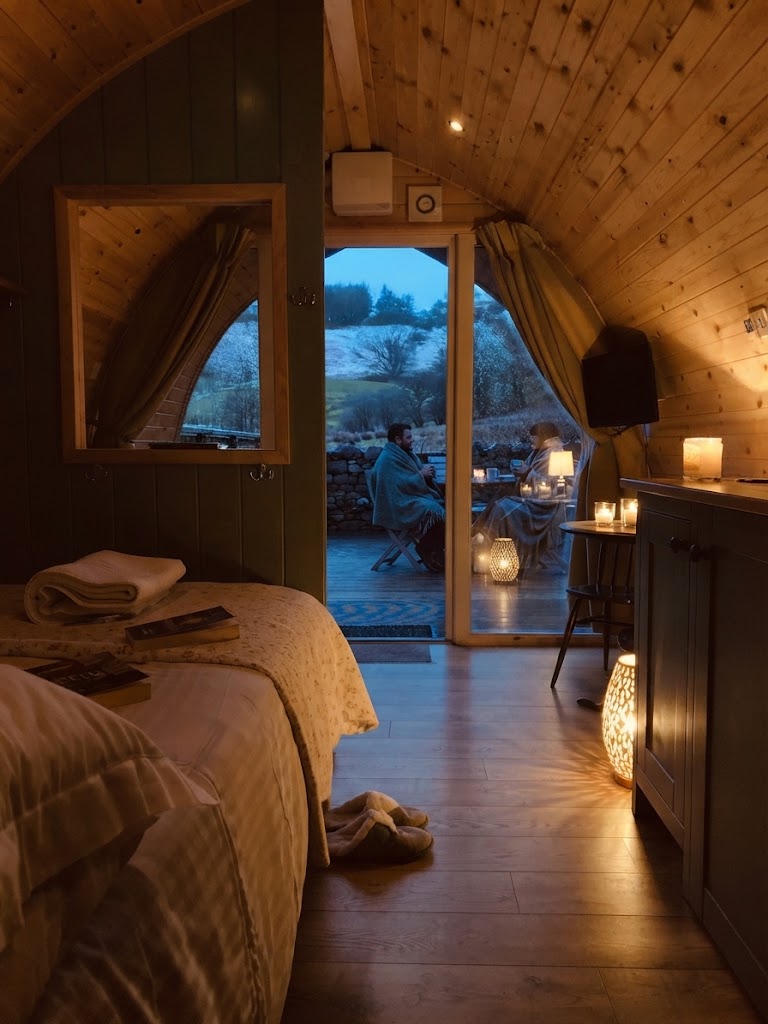
- Camping pods. Curved insulated timber shells, typically 3m by 5m, sleeping two to four. The workhorse of the Lakes. Our pods guide breaks the tiers down.
- Shepherd's huts. Corrugated iron on cast iron wheels, restored or newly built, almost always a two-person unit with a wood burner. See shepherd's huts in the Lake District.
- Yurts. Mongolian-pattern circular frames under felt and canvas, 5m to 7m across, sleeping four to six around a central stove. More on yurts.
- Safari tents. Large lodge tents on timber decks with separate bedrooms and a kitchen inside. The family option. Safari tents explained.
- Bell tents. Single-pole canvas cones, cheapest way in, summer only. Bell tent detail here.
- Odd one-offs. Converted horseboxes, treehouses, hobbit-hole style earth-sheltered builds, cabins with glass gables sold as stargazing units. Fun, scarce, expensive.
Unique features cluster by type. Yurts give you height and a stove you can actually cook on. Safari tents give you a fridge and a sink. Pods give you insulation and a season that never closes. Shepherd's huts give you a bed by a window and nothing else, which is often exactly right.
Spotlight on Eden Heights Glamping
Eden Heights Glamping operates in the Eden Valley, on the eastern side of the national park near Penrith. The location matters more than the brochure. The Eden Valley sits in the rain shadow of the central fells, so it records materially less rainfall than Borrowdale or Wasdale — roughly a third as much in some years. Red sandstone villages, gentler contours, the Pennines on the other horizon.
The setting is farmland rather than fellside. Views run across open country to the higher ground rather than up a crag. For anyone who has spent a week being rained on in a steep-sided valley, that trade is attractive.
Accommodation at this style of site typically means a small number of well-appointed units rather than a pod field. Expect private hot tubs, decking, en-suite arrangements and the general absence of a shared shower block. Penrith gives you a supermarket, a railway station on the West Coast Main Line, and the M6 at junction 40.
Guest feedback for Eden Valley glamping generally praises the quiet and the space, and generally raises the same reservation: you are twenty to thirty minutes from Ullswater and closer to forty from Keswick. If your itinerary is fell-heavy every day, that mileage adds up. We look at this operator in more depth on our Eden Heights review page.
Inside Out Camping and Glamping: What to Expect
Inside Out Camping and Glamping sits at the other end of the spectrum from a hot tub retreat. The proposition is canvas and simplicity — bell tents and similar structures, pitched for a season, aimed at people who want the outdoors with a decent bed rather than a spa.
Expect a working relationship with the weather. Canvas breathes, which is pleasant in July and honest in October. Sites of this kind normally supply the tent, beds, bedding and basic furniture, then point you at a shared kitchen and shower facility. Fire pits are usually part of the deal.
What visitors tend to value: the price, which undercuts pods substantially; the sociability, since canvas sites cluster; and the fact that a bell tent at dusk with a fire outside it is simply a nicer place to be than a timber box. What visitors tend to warn about: cold mornings in shoulder season, and the walk to the loo.
How we treat named sites
We do not stay at every operator we mention and we take no payment from any of them. Descriptions here are built from published information, planning context and the general shape of public feedback. Always check current amenities and prices directly with the site.
Enhancing Your Glamping Experience
Glamping Sites with Hot Tubs
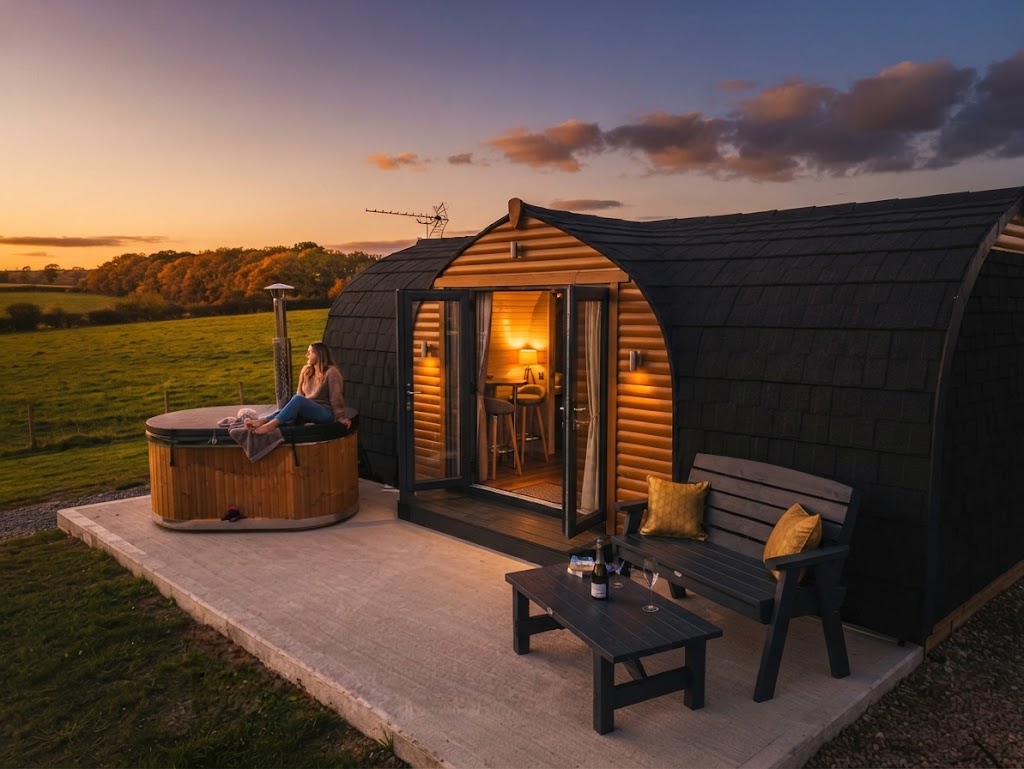
A private hot tub is the single most requested amenity in Lake District glamping, and it is the one that moves price hardest. Sites offering tubs cluster around the Eden Valley, the Lyth Valley, the Cartmel peninsula and the fringes of Windermere — areas with enough land per unit to give each tub genuine privacy.
The benefits are more practical than the marketing suggests. Hot water at 38°C after seven hours on Helvellyn does real work on your legs. A tub extends the usable evening in April, when it is too cold to sit outside otherwise. And in rain, a hot tub is the one outdoor activity that improves.
Safety and etiquette, briefly:
- Limit sessions to 15–20 minutes, then get out and cool down.
- Alcohol and hot water combine badly. Dehydration arrives faster than you expect.
- Pregnant guests and anyone with a heart condition should check with a GP first.
- Wood-fired tubs need two to three hours' notice. Light it on arrival.
- Most sites impose a 10pm or 10.30pm cut-off. Sound carries absurdly well in a quiet valley.
Our hot tub glamping guide covers wood-fired against electric, private against shared, and whether the upgrade earns its money at each price point.
Proximity to Wild Swimming Spots
Wild swimming spots sit close to a surprising number of glamping sites, because the same geography that makes a valley pretty puts water at the bottom of it. Sites near Ullswater, Coniston Water, Derwentwater and the smaller tarns all put a swim within walking distance.
Reliable water, roughly north to south:
- Ullswater eastern shore. Shallow entry near Howtown, clear water, steamer pier for a one-way walk-swim.
- Derwentwater. Calfclose Bay is the classic. Shelving beach, islands to aim at, Keswick ten minutes away.
- Rydal Water and Grasmere. Small, sheltered, warm by August standards. Busy.
- Crummock Water and Buttermere. Cold, deep, spectacular, quiet. The best of them.
- Coniston Water. Long and calm, good for distance swimming.
- Blea Tarn and Easedale Tarn. High, tiny, freezing, unforgettable.
The appeal is partly physiological and partly stubbornness. Cold water immersion produces a genuine adrenaline and dopamine response — the thing people call the swimmer's high. Doing it at 7am from a pod door, with nobody else on the shore, is one of the better arguments for glamping over a hotel.
Safety is not optional. Cold water shock affects strong swimmers. Acclimatise for a full minute before committing, never swim alone, avoid alcohol beforehand, and note that Thirlmere and Haweswater are reservoirs with swimming restrictions. Guidance from the RNLI and the Outdoor Swimming Society is worth ten minutes of your time.
Providers and Booking Information
Glamping Experiences by Canopy & Stars
Canopy & Stars is a UK glamping marketplace, part of the Sawday's group, which curates rather than aggregates. It lists a small number of Cumbrian properties chosen for design and setting rather than volume. Treehouses, architect-built cabins, converted shepherd's huts, the occasional genuinely strange structure.
What it does well: photography and copy that tell you what the place is actually like, a clear amenity list, and a filter set that includes things owners often hide. What it costs: the curated end of the market prices at £180 to £450 a night, and the platform takes a commission that is baked into the rate.
Booking runs through the platform, with confirmation and pre-arrival information handled centrally. Customer service is generally reported as responsive. Their site is worth browsing even if you then book elsewhere, simply to calibrate what good looks like: canopyandstars.co.uk.
For a broader view of the operator landscape, including the multi-site names, see our site reviews section.
Comparing Eden Valley and Keswick Glamping Options
These two areas represent the main strategic choice in Lake District glamping: dry and spacious, or central and dramatic.
| Eden Valley | Keswick & Borrowdale | |
|---|---|---|
| Landscape | Rolling farmland, red sandstone, Pennine views | Steep fells, Derwentwater, Borrowdale crags |
| Rainfall | Around 900–1,000mm a year | 2,000mm+, up to 3,300mm at Seathwaite |
| Glamping supply | Small farm sites, high tub density, few units each | Larger pod fields, hostel pods, campsite pods |
| Typical rate | £140–£280 with tub | £95–£190, tubs less common |
| Walking access | 20–40 min drive to major fells | Walk from the door to Catbells, Skiddaw, Latrigg |
| Town amenities | Penrith: supermarkets, station, M6 | Keswick: gear shops, theatre, restaurants, market |
| Crowds | Quiet even in August | Busy, sometimes very |
| Best for | Couples, dry-weather odds, hot tub stays | Walkers, families, first visits |
Our recommendation splits by trip length. For two nights, choose Keswick and walk from the door — you cannot afford driving time. For five nights or more, the Eden Valley gives you a quieter base and the drive stops mattering. Details for both sit in our locations section.
Practical Tips for Glamping in the Lake District
Best Time to Go Glamping
Cumbrian weather is genuinely variable and no month is reliable. The pattern that holds:
| Period | Typical daytime high | Rain | Price against peak | Notes |
|---|---|---|---|---|
| Jan–Feb | 6–8°C | High | −45% | Pods only, empty fells, dark by four |
| Mar–Apr | 9–13°C | Moderate | −30% | Daffodils, lambs, Easter spike |
| May–Jun | 15–19°C | Lowest of the year | −15% | Best value-to-weather ratio |
| Jul–Aug | 19–21°C | Moderate, thundery | Peak | Book 4–6 months ahead |
| Sep | 16–18°C | Rising | −20% from mid-month | Warm water, thinning crowds |
| Oct–Dec | 7–12°C | Highest | −35% | Canvas closes, half-term spike |
Booking tactics change with season. For July and August, book in February and expect no flexibility. For May or September, six to eight weeks out is usually fine. For February, you can often book on a Thursday for the Friday and negotiate a one-night stay. Met Office forecasts for the Lake District are worth checking three days out, not three weeks.
Cost and Booking Process
Typical costs, two adults, one night:
- Bell tent, low season: £75–£95
- Basic pod, shared facilities: £95–£145
- En-suite pod: £150–£240
- Shepherd's hut with wood burner: £140–£230
- Anything with a private hot tub: £220–£400
- Curated design-led property: £250–£450
Four factors move the number: season, private hot tub, en-suite bathroom, and how many nights you commit to. Two-night minimums are near universal in season. Weekend nights carry a premium of £20 to £50 over midweek at the same site.
A booking sequence that works:
- Set your dates, then decide on the hot tub. That decision sets the budget.
- Choose one valley. Resist the urge to split the trip.
- Use an aggregator to see what is free, then open the site's own website.
- Read the amenity list properly. Bed made up? Bathroom private? Cooking allowed indoors?
- Email one specific question and judge the reply.
- Check the cancellation window and deposit terms.
- Book direct. Ask about early arrival and firewood in the same message.
If your budget is the binding constraint, our cheap glamping page covers the sub-£100 end and the one-night workarounds. If it is not, luxury glamping is where the money goes.
Questions people ask
Which is the best glamping site in the Lake District?
There is no single answer and anyone who gives you one is selling something. For walkers, a Keswick or Borrowdale pod site wins on access. For couples, an adults-only shepherd's hut with a private tub in the Lyth Valley. For families, a safari tent or yurt with floor space. Match the site to the trip rather than chasing a ranking.
How much does glamping in the Lake District cost per night?
Basic pods run £95–£145. En-suite pods and shepherd's huts land at £150–£240. Add a private hot tub and you are looking at £220–£400. High season roughly doubles the low-season figure for the same unit.
Are there hidden gem glamping sites in the Lake District?
Yes, and they are mostly single-unit farm diversifications on the eastern and southern edges — the Eden Valley, the Lyth Valley, the Winster Valley. They rarely appear on aggregators because one pod does not justify the commission. Search the parish name plus "glamping" rather than the national park name.
Can you glamp near a lake in the Lake District?
Waterside glamping is rare because National Park planning restricts development on the shoreline. Sites within a short walk of water exist at Ullswater, Coniston and on the quieter reaches of Windermere. Anything advertised as lakeside usually means a five to fifteen minute walk.
Do Lake District glamping sites have ensuite facilities?
Some do. En-suite pods with a shower room and WC are now common at the £160+ tier. Below that, expect a shared amenity block. The word "facilities" in a listing does not mean private — look for the words "en-suite" or "private bathroom".