Dogs
Discover Dog-Friendly Glamping in the Lake District
Roughly half of Lakeland glamping accepts dogs, which is unusually generous. Here is what it costs, which walks and swims work, and the sheep rules that matter more than any of it.
TL;DR
- About half of Lake District glamping accepts dogs, at £8–£15 per dog per night, usually capped at two.
- Cabins and pods suit dogs better than canvas: hard floors, lockable doors, no soft furnishings to ruin.
- Almost no site allows dogs to be left unattended. Plan your days around that.
- Lambing runs March to May. Leads on, on the open fell as well as in fields.
- Blue-green algae in late summer is fatal to dogs. Do not let them drink from still, scummy water.
Finding the Perfect Dog-Friendly Glamping Site
Top Dog-Friendly Glamping Sites in the Lake District
Dog friendly glamping is unusually well provided for in Cumbria. The share of sites accepting dogs sits around half, which is materially higher than for cottages or hotels in the same region. The reason is structural rather than sentimental: glamping units have hard floors, no carpet, minimal soft furnishing and a garden hose nearby.
The site types that welcome dogs most readily:
- Farm pod sites. Two to six pods on working land. Dogs are unremarkable here; the owner has three of their own.
- Shepherd's hut retreats. Very often dog friendly, with the caveat that a hut is small.
- Campsite pod fields. Usually take dogs, sometimes restricted to designated pods.
- Safari tent and yurt sites. Variable. Canvas operators are more cautious.
- Luxury single-unit sites. Split roughly evenly between dog friendly and adults-and-no-pets.
Location advantages within the national park, from a dog's point of view:
| Area | Why it works with a dog | Watch out for |
|---|---|---|
| Keswick & Borrowdale | Fells from the door, Derwentwater shore path, dog-friendly pubs | Sheep on every fell path |
| Ullswater | Ullswater Way shoreline walk, steamers carry dogs, easy swimming | Narrow lakeside road |
| Eden Valley | Quiet lanes, drier weather, space around units | Fewer dramatic walks nearby |
| Lyth & Winster valleys | Low fells, woodland, almost no traffic | Limited swimming |
| Grizedale & Coniston | Forest trails, shade in summer, quiet water | Mountain bikers on shared trails |
| Windermere | Shore path, ferries take dogs, plenty of dog-friendly cafes | Crowds and traffic in season |
Booking Your Dog-Friendly Glamping Experience
Checking availability with a dog in the party is slightly different, because dog-friendly units are often a subset of the site's stock.
- Filter for pet friendly, then verify on the site's own website. Platform filters are unreliable.
- Book the specific unit, not just the tier. Dog-friendly pods are limited and they go first.
- Declare the number of dogs at booking. Turning up with an undeclared second dog does not go well.
- Ask about the fee structure — per night or per stay makes a real difference over a week.
- Ask whether there is an enclosed area. This is the single most useful facility and rarely advertised.
- Confirm the unattended policy in writing.
Booking direct beats platforms for dog owners specifically. Owners will tell you which pod has the shortest walk to the field gate, whether the neighbouring unit has a dog, and whether they will make an exception for a third small dog. A booking engine will not.
Cancellation and refund policies follow the usual glamping pattern: 25 to 30% deposit, balance two to four weeks out, full refund of the balance outside 28 days. Note that if you cancel because your dog is unwell, that is not usually covered — but a date transfer often is if you ask nicely.
Exploring Accommodation Options
Dog-Friendly Cabins and Huts
Cabins and huts are the two formats that suit dogs best, and they are not the same thing.
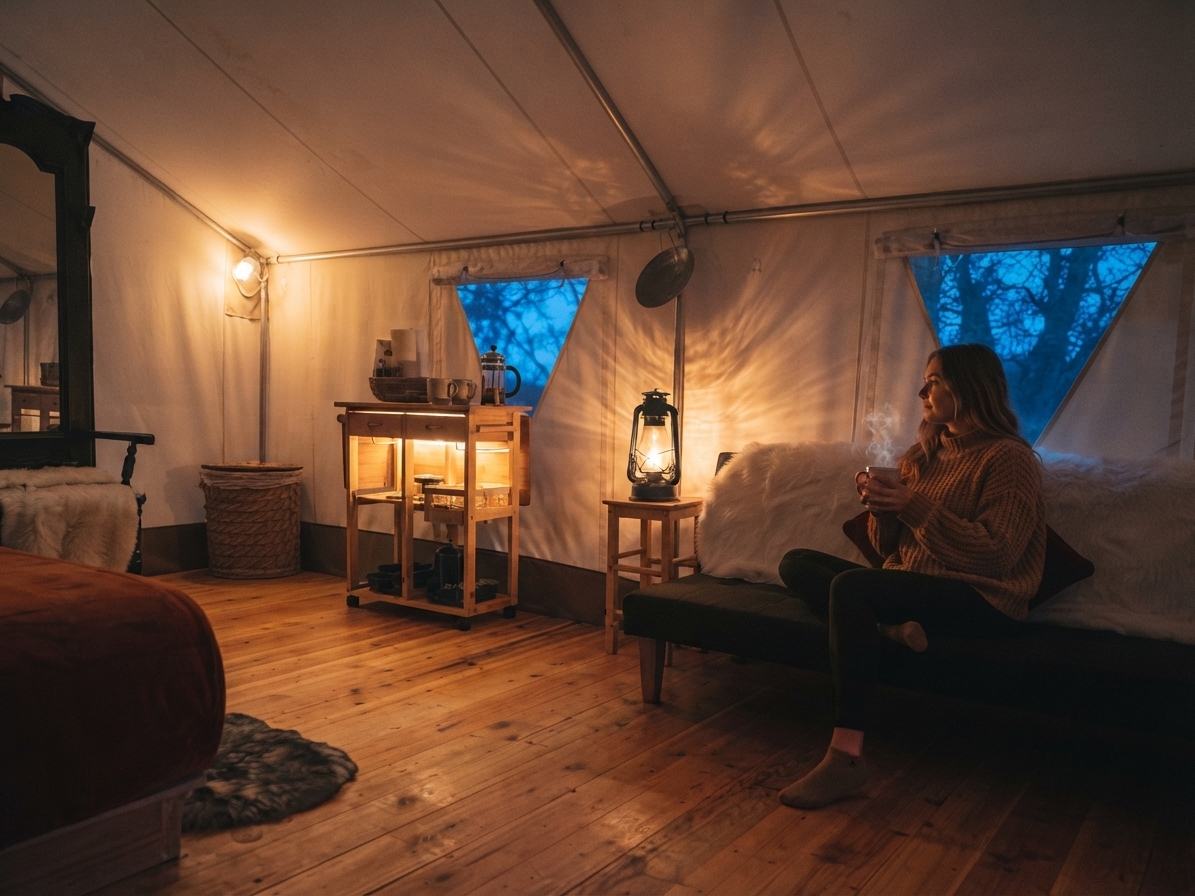
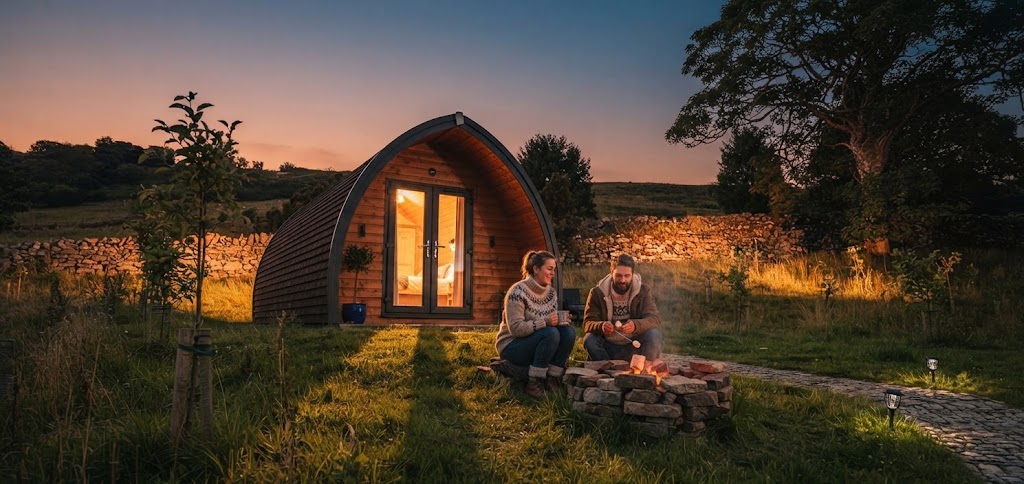
Cabins and pods are timber structures with hard floors, 12 to 18 square metres, insulated and heated electrically, with a lockable door. For a dog this is close to ideal: cool in summer, warm in winter, easy to clean, and there is nothing to chew that matters.
Shepherd's huts are smaller — 8 to 14 square metres — with a wood burner rather than electric heat. Dogs love the stove. The constraint is floor area: a hut has room for a dog under the bed or beside the door, and not much more. A large breed and two adults in a hut is genuinely cramped.
| Cabin or pod | Shepherd's hut | |
|---|---|---|
| Floor space | 12–18m² | 8–14m² |
| Heat | Electric, thermostatic | Wood burner |
| Floor | Hard, easy to mop | Hard, often timber |
| Suits a large dog | Yes | Marginal |
| Season | Often year round | Year round |
| Stove safety with a dog | Not an issue | Needs a guard, ask |
| Peak rate | £125–£240 | £165–£260 |
Amenities specifically for dogs at the better sites: a supplied towel and bowl, an outside tap for washing legs, a hook by the door for a lead, a throw for the bed, a dog bed, a treat on arrival, and an enclosed paddock. That last item is worth more than all the others combined, since it means the dog gets twenty minutes off the lead without you walking anywhere.
Understanding Pet Policies
Common policies across Lakeland glamping:
- Fee: £8–£15 per dog per night, sometimes per stay, occasionally nothing
- Maximum number: two is standard, one at smaller units, three by negotiation
- Unattended: not permitted, in the unit or in a vehicle
- On furniture and beds: discouraged; many sites supply a throw as a compromise
- On site: lead at all times outside the unit
- Hot tubs: dogs excluded, always
- Indoor communal areas: usually excluded
- Fouling: clear up immediately; some sites will charge if you do not
- Breeds: a few sites exclude specific breeds; check if relevant
Tips for a smooth stay with your dog:
- Bring their own bed or blanket. Familiar smell, better sleep, less barking.
- Bring two towels minimum. Three if it is October.
- Walk them properly on arrival day before settling in, so they are tired for the first evening.
- Take a long line for the enclosed area if there is one, and for tethering outside.
- Feed them at the usual time. A change of routine plus a change of place produces upset dogs.
- Check the pod for gaps, hazards and anything chewable before you let them loose in it.
Enjoying Activities with Your Dog
Paw-some Dog-Friendly Activities
The Lake District is one of the best dog-walking regions in England, because open access land and public rights of way cover so much of it.
Activities that work well with a dog:
- Fell walking. Catbells, Hallin Fell, Latrigg, Loughrigg, Scout Scar. All open to dogs, all with sheep.
- Lake shore paths. The Ullswater Way, the Derwentwater circuit, the Windermere shore path north of Bowness. Level, long, and good for older dogs.
- Forest trails. Grizedale and Whinlatter both have waymarked walking trails with shade, which matters in July.
- Steamers and ferries. Ullswater Steamers, Windermere Lake Cruises and the Windermere ferry all carry dogs. This turns a linear walk into a much better day.
- Beaches. Calfclose Bay on Derwentwater, Glencoyne Bay on Ullswater, the shingle at Coniston.
- Pubs. Most Lakeland pubs take dogs, many in the bar rather than just the garden.
Wild swimming walks are the combination that makes this region special for dogs. Walk along a shoreline, let the dog swim, walk on, repeat. Reliable spots:
- Derwentwater, Calfclose Bay. Shelving shingle, easy in and out, ten minutes from Keswick.
- Ullswater, Glencoyne and Howtown. Shallow entry, clear water, steamer nearby.
- Coniston Water, east shore. Long and calm, good for a dog that swims for distance.
- Crummock Water. The best of them, and the quietest.
- Rydal Water. Small, warm by August, and very popular, so busy with other dogs.
Safety, and this part genuinely matters:
- Blue-green algae blooms on still water in warm weather from roughly July to September. It is toxic and frequently fatal to dogs. If the water looks like pea soup or has a scum line, keep the dog out and do not let it drink.
- Sheep graze the open fell, not just enclosed fields. Lambing runs March to May. A dog that chases sheep can legally be shot, and farmers here are not bluffing.
- Cattle with calves are the most dangerous animals on Lakeland paths. If cattle move towards you, let the dog off the lead immediately and walk away separately.
- Ticks are abundant in bracken and long grass. Check nightly, especially ears, armpits and groin.
- Cold and depth. Deep lake water is cold all year and tires dogs faster than they signal.
- Summits. Loose scree and steep drops are bad for dogs. Striding Edge is not a dog route.
Planning a Complete Dog-Friendly Itinerary
A four-night shape that works:
| Day | Morning | Afternoon | Evening |
|---|---|---|---|
| 1 | Arrive, shop, settle the dog in | Short low-level walk, Latrigg or Hallin Fell | Fire pit, dog-friendly pub |
| 2 | Catbells or the Ullswater Way section | Swim at Calfclose or Glencoyne | Cook at the pod, tired dog |
| 3 | Steamer one way | Walk back along the shore | Pub with a fire |
| 4 | Forest trail at Whinlatter or Grizedale | Rest, tick check, dry the dog | Last fire |
| 5 | Short lane walk, pack, checkout | Drive home | — |
The balance to aim for: one big walk, one water day, one easy day, and never two hard days back to back. Dogs hide fatigue better than people do and then stiffen up badly on day three.
Local dining and pet-friendly spots: most Lakeland pubs take dogs in the bar, and many cafes take them outside or in a designated area. Keswick, Ambleside, Grasmere, Coniston and Pooley Bridge all have several options each. Ask rather than assume — the pub that took dogs last year may have changed hands.
Evaluating Costs and Reviews
Cost of Dog-Friendly Glamping in the Lake District
| Accommodation | Low season | Peak | Dog fee |
|---|---|---|---|
| Basic camping pod | £70–£95 | £130–£170 | £8–£12 |
| Standard pod | £95–£125 | £160–£210 | £8–£15 |
| Ensuite pod | £125–£170 | £205–£265 | £10–£15 |
| Shepherd's hut | £100–£140 | £170–£250 | £10–£15 |
| Pod with hot tub | £180–£240 | £280–£350 | £10–£15 |
| Safari tent, sleeps 6 | £140–£185 | £225–£290 | £10–£15 |
Factors affecting the total: season above all, then the accommodation tier, then how many dogs, then whether the fee is per night or per stay. Over a seven-night trip with two dogs, a per-night fee of £12 adds £168 — enough that it is worth asking whether they cap it.
Budget-friendly tips for glamping with dogs:
- Travel midweek out of season. Same pod, same dog, 35% less.
- Look for sites charging per stay rather than per night.
- Ask whether a second dog is half price. Several sites do this quietly.
- Skip the hot tub. Your dog cannot use it and it costs £80 a night.
- Choose a site with an enclosed area, which saves you a car journey every morning.
- Self-cater. Dog-friendly pubs are good but two meals a day adds up fast.
Visitor Reviews and Ratings
Commonly praised in dog friendly glamping reviews: the welcome, particularly where the site left a treat or a towel; hard floors and how easy the unit was to keep clean; enclosed areas where they exist; and owners who were relaxed rather than anxious about dogs.
Commonly criticised: dog fees that were not clear at booking; discovering the unit was carpeted after all; no outside tap for washing muddy legs; neighbouring dogs barking; and the unattended rule, which people book without reading and then find constraining.
How to use reviews when choosing: search the review text for the word "dog" specifically. Sites where multiple recent reviews mention dogs positively are sites that genuinely welcome them, as opposed to sites that permit them for £12. That distinction shows up nowhere in the listing and clearly in the reviews.
Comparing with Other Regions
Dog-Friendly Glamping in Somerset
Somerset is the Lake District's main southern competitor for dog friendly glamping, and it is a genuinely different proposition. Expect shepherd's huts and safari tents in orchards and river valleys, on the Somerset Levels, in the Quantocks and along the Mendips. Rates run £20 to £40 a night below Cumbrian equivalents.
| Lake District | Somerset | |
|---|---|---|
| Terrain | Steep fells, deep lakes | Levels, low hills, river valleys |
| Walking | Demanding, spectacular | Gentle, long, waymarked |
| Swimming for dogs | Sixteen lakes and hundreds of tarns | Rivers, and the Bristol Channel coast |
| Livestock risk | High — sheep on open fell | Moderate — mostly enclosed fields |
| Rainfall | 1,600–3,300mm | 700–900mm |
| Typical rate | £125–£260 | £95–£220 |
Somerset's distinctive attractions: Cheddar Gorge and the Mendip caves, Glastonbury Tor, Wells and its cathedral, the Somerset Levels for birdlife, Exmoor on the western edge, and the Quantocks, England's first designated AONB. For an older dog that struggles with steep ground, Somerset is the kinder choice.
Dog-Friendly Glamping in Bedfordshire
Bedfordshire is a much smaller glamping market and serves a different purpose entirely: it is where people from London go for a two-night break without a long drive. Expect bell tents, shepherd's huts and pods on farms and estates, and rates in the £85 to £180 range.
Compared with the Lake District, Bedfordshire offers proximity and little else in landscape terms — it is one of England's flattest and most agricultural counties. What it has is the Greensand Ridge, a 40-mile waymarked walking route; Woburn Abbey and its deer park; Whipsnade Zoo; the Dunstable Downs and the chalk escarpment of the Chilterns edge; and RSPB Sandy for birdwatching.
Where it beats Cumbria for a dog owner: the drive. If you are in the south-east and your dog does not travel well, four hours less in the car is a serious argument. Where the Lake District wins on everything else: the walking, the swimming, the scenery, and the sheer density of things to do with a dog outdoors.
Our honest view: if you can get to Cumbria, come to Cumbria. Sixteen lakes and a thousand kilometres of rights of way is not a fair fight. See dog friendly glamping pods for the specifics of doing it here.
Questions people ask
How much do Lake District glamping sites charge for dogs?
£8 to £15 per dog per night is the standard band, occasionally charged per stay instead. A minority charge nothing. Very few charge more than £15, and any site asking £25 a night should be offering something specific for it.
Can I leave my dog alone in a glamping pod?
Almost never. Sites prohibit it because a dog alone in an unfamiliar timber box barks, and the neighbours are thirty metres away. Plan your days assuming the dog comes with you, which in the Lake District is easy.
Are Lake District fell paths dog friendly?
Overwhelmingly yes. Open access land and public rights of way cover most of the national park and dogs are welcome on them. The constraint is livestock, not access — sheep graze on open fell, so leads are needed far more often than people expect.
Can dogs swim in the lakes?
Yes, at most of them, and most dogs love it. Two cautions: blue-green algae blooms on still water in late summer are toxic and often fatal, and cold deep water tires dogs faster than they realise. Rinse them afterwards if you can.
Which is better for a dog, a pod or a bell tent?
A pod, clearly. It has a hard floor, a lockable door and a wipeable interior. A bell tent has canvas walls a determined dog can damage, no lock, and a groundsheet that will not survive muddy paws. Some canvas sites take dogs anyway; pods take them more happily.