Pods with dogs
Discover Dog-Friendly Glamping Pods in the Lake District
Pods are the best glamping format for a dog, and Cumbria has hundreds of them. What they cost, which trails start at the gate, and the policies to check before you pay.
TL;DR
- Dog friendly pods are widely available across Cumbria — roughly half the stock, at £8–£15 per dog per night.
- Hard floors, lockable doors and wipeable interiors make pods the best glamping format for dogs.
- Ask three questions: how many dogs, is there an enclosed area, and can they be left alone. The last answer is almost always no.
- Best bases for trails from the gate: Keswick, Ullswater, the Lyth Valley and Grizedale.
- Pods beat cottages and hotels on dog policy and lose to them on space.
Finding the Perfect Dog-Friendly Glamping Pod
Availability of Dog-Friendly Glamping Pods
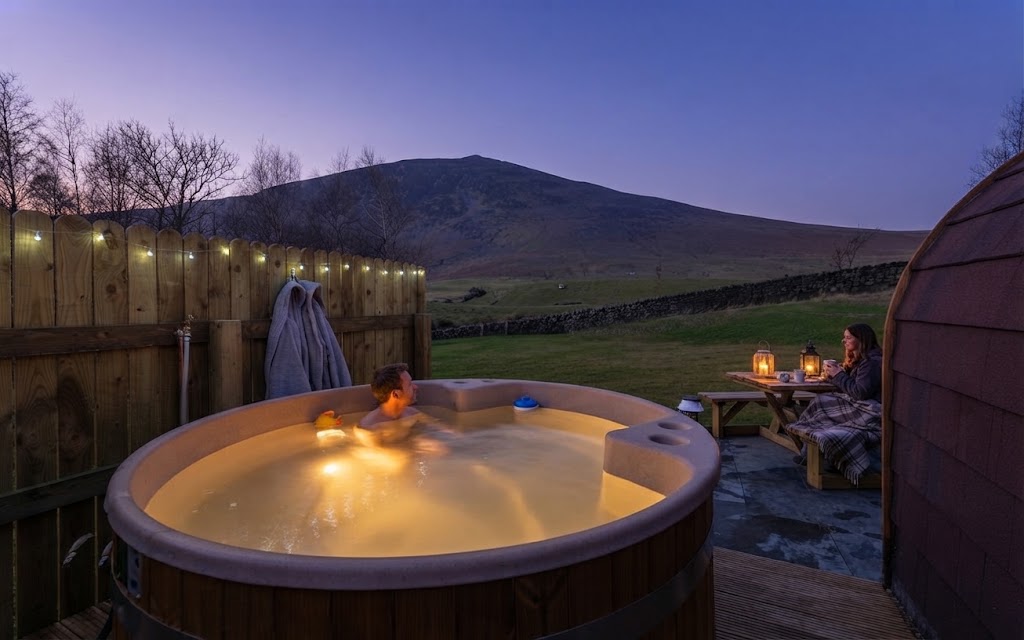
Dog friendly glamping pods are widely available across the Lake District, and more so than in most English holiday regions. Around half of Cumbrian pod sites accept dogs. The reason is the building itself: a pod has a hard floor, timber or laminate rather than carpet, minimal soft furnishing, and an outside tap fifteen metres away.
Where the supply is:
| Area | Dog friendly supply | Trails from the gate | Typical rate |
|---|---|---|---|
| Keswick & Borrowdale | High | Latrigg, Catbells, Derwentwater shore | £110–£175 |
| Ullswater & Pooley Bridge | High | Ullswater Way, Hallin Fell, Gowbarrow | £120–£210 |
| Eden Valley | Moderate | Quiet lanes, river paths, Pennine edge | £130–£250 |
| Lyth & Winster valleys | High | Scout Scar, Whitbarrow, woodland | £115–£200 |
| Coniston & Grizedale | Moderate | Forest trails, Coniston shore | £110–£190 |
| Windermere fringe | Moderate | Shore path, Orrest Head, School Knott | £140–£230 |
| Kentmere & Troutbeck | High | The Kentmere Round, straight from the gate | £110–£175 |
Booking during peak seasons is where dog owners run into trouble, because dog-friendly units are usually a subset of a site's stock rather than all of it. A site with eight pods may have three that take dogs, and those three sell first. Practical response: book four to six months out for July and August, book the specific pod by number, and declare the dogs at the point of booking rather than mentioning them later.
Cost of Staying in a Dog-Friendly Glamping Pod
| Pod tier | Low season | Shoulder | Peak | Plus dog |
|---|---|---|---|---|
| Basic, shared facilities | £65–£90 | £95–£125 | £125–£165 | £8–£12 |
| Standard, bed made up | £90–£115 | £125–£155 | £155–£200 | £8–£15 |
| Ensuite | £120–£160 | £160–£205 | £200–£260 | £10–£15 |
| With private hot tub | £175–£240 | £240–£300 | £300–£390 | £10–£15 |
Factors affecting price are the same as for any pod — season, en-suite, hot tub, weekend, location — with the dog fee bolted on. What varies most between sites is how the fee is structured. £12 per dog per night for two dogs over seven nights is £168. The same site charging £25 per dog per stay would cost £50. Nobody advertises which model they use, so ask.
Budget-friendly tips for glamping with dogs:
- Look for per-stay dog fees rather than per-night. Biggest single saving available.
- Travel midweek out of season. The dog does not care that it is February.
- Skip the hot tub. Your dog cannot use it, and it costs more than the dog does.
- Choose a site with an enclosed area, which saves you driving somewhere every morning.
- Ask about a second dog at half price. Several sites do this without saying so.
- Self-cater. Dog-friendly pubs are plentiful and eating out twice a day is what breaks the budget.
Amenities and Features of Glamping Pods
Amenities Offered by Dog-Friendly Glamping Pods
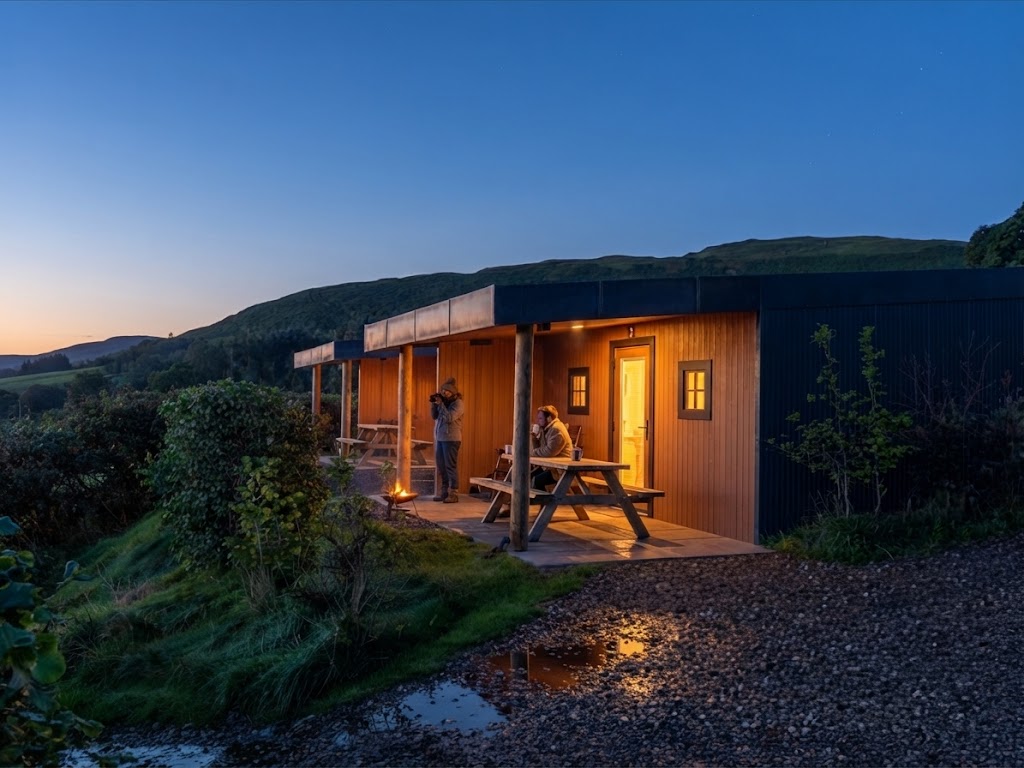
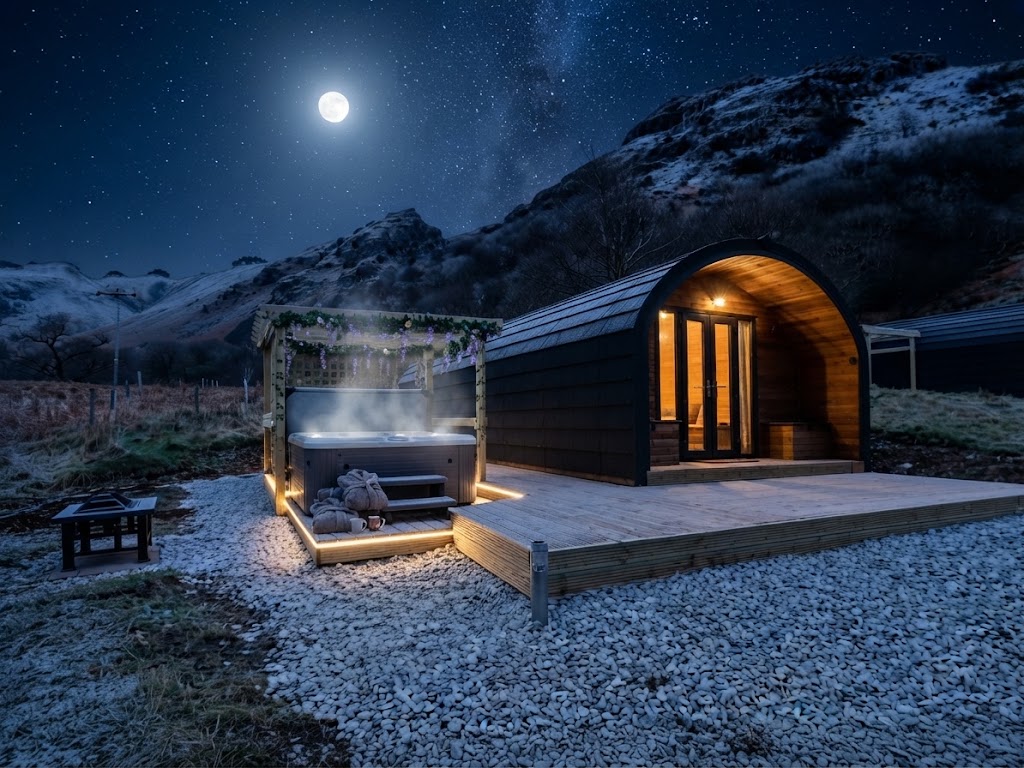
Standard pod amenities apply regardless of dogs: bed with a real mattress, mains sockets, electric heating, table and chairs, outdoor bench, fire pit at many sites, and access to shower and toilet facilities. The en-suite tier adds a private bathroom and a kitchenette.
Special features for dogs, ranked by how much difference they actually make:
- Enclosed field or dog paddock. Transformative. Twenty minutes off the lead without leaving the site.
- Outside tap, ideally with warm water. Muddy legs are a daily event in Cumbria.
- Hard floor throughout. Most pods have this; a few have rugs you will end up rolling up.
- Supplied towel and bowl. Small courtesy, saves packing space.
- Hook by the door for a lead, and a boot tray.
- A throw for the bed, which is a site quietly conceding the dog will get on it.
- Dog bed provided. Nice, though most dogs prefer their own.
- Sheltered outdoor space so a wet dog can dry somewhere that is not the pod.
Comparing amenities across sites is mostly an exercise in reading between the lines. A site that lists a dog paddock, an outside tap and a supplied towel has thought about dogs. A site whose only mention of dogs is "£12 per dog per night" has thought about revenue. Both will take your dog; one will make the week easier.
Scenic Views from the Glamping Pods
Views vary by site position, and it is worth being specific because "views" in a listing covers everything from a panorama to a hedge.
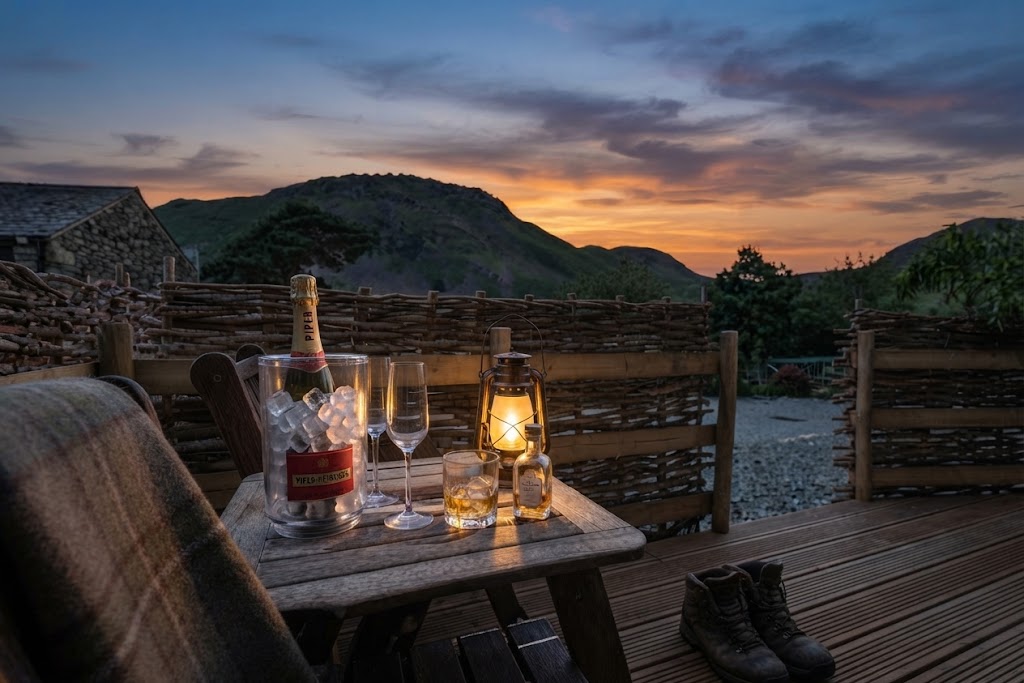
- Derwentwater and the Keswick fells. Sites on the lower slopes of Skiddaw and above Borrowdale look south down the lake to Catbells and the Newlands fells.
- Ullswater from the western shore. The best water views in Cumbrian glamping, because the ground rises steeply enough to see over the trees.
- Windermere from the eastern hillside. Long views south-west towards the Coniston and Langdale fells. Evening light is the reason to pay for it.
- The Eden Valley. Open farmland with the Lakeland fells on one horizon and the North Pennines on the other. Underrated.
- Lyth and Winster. Low limestone fells, damson orchards, Morecambe Bay light in the distance.
- Kentmere and Troutbeck. Enclosed valley heads with the ridge lines above. Dramatic rather than expansive.
Benefits of choosing a pod with a view, when you are travelling with a dog specifically: you will spend more evenings sitting outside the pod than you would otherwise, because the dog needs to be out and you cannot leave it alone indoors. A pod that faces something worth looking at pays for itself in that context.
Exploring the Lake District with Your Dog
Proximity to Walking Trails
Dog friendly walks near pod clusters, with honest assessments:
| Walk | Time | Difficulty | Livestock | Swimming |
|---|---|---|---|---|
| Derwentwater shore, Keswick to Calfclose Bay | 1–2 h | Easy, level | Low | Yes, excellent |
| Latrigg from Keswick | 1.5 h | Easy | Some sheep | No |
| Catbells ridge | 2 h | Moderate, one scrambly step | Sheep throughout | At the lake below |
| Ullswater Way, Howtown to Patterdale | 3 h | Moderate, undulating | Sheep, some cattle | Yes, several bays |
| Hallin Fell from Howtown | 40 min | Easy but steep | Sheep | At Howtown |
| Scout Scar from Kendal | 1.5 h | Easy | Sheep, cattle in summer | No |
| Grizedale Forest trails | 1–3 h | Easy to moderate | None | No |
| Kentmere Round | 7 h | Hard, exposed | Sheep on the fell | Reservoir, cold |
Tips for dog friendly walks in the Lake District:
- Start early in summer. Trailheads fill by nine and dogs overheat by eleven.
- Carry water for the dog even beside a lake, because lake edges are not always accessible.
- Choose shore paths over summits in hot weather. Shade and water both matter.
- Check paw pads after rocky ground. Lakeland scree is abrasive.
- Forest trails at Grizedale and Whinlatter are the wet-weather answer — shelter, no livestock, good footing.
Safety considerations, and these are not optional. Sheep graze on open fell, not just in fields. Lambing runs March to May and farmers here are entitled to shoot a dog worrying livestock. Cattle with calves are the biggest actual risk to walkers; if cattle move towards you, let the dog off the lead immediately and walk away separately. Blue-green algae blooms on still water from July to September and is frequently fatal — if the water looks like pea soup, keep the dog out. Ticks are abundant in bracken; check nightly.
Policies Regarding Dogs at Glamping Sites
Common policies you will meet:
- Number: two dogs standard, one at smaller units
- Fee: £8–£15 per dog per night, or a flat per-stay charge
- Unattended: prohibited, in the pod and in a vehicle
- On site: lead at all times outside the unit
- Beds and furniture: discouraged; throws often supplied
- Hot tubs: excluded, without exception
- Communal indoor spaces: usually excluded
- Fouling: clear up immediately; some sites levy a charge
- Barking: sites reserve the right to ask you to leave. This is enforced occasionally
Advice for ensuring a pleasant stay: bring their own bed for the familiar smell, walk them hard on arrival day so the first evening is calm, keep feeding times consistent, and check the pod for gaps and hazards before letting the dog loose. If your dog barks when left, plan every day around taking them with you — which in Cumbria is entirely feasible, since the steamers, the fells and most pubs all accept dogs.
Booking and Reviews
Booking Process for Glamping Pods
- Filter for pet friendly, then verify on the site's own website rather than trusting the platform.
- Identify which specific pods take dogs. Ask for unit numbers.
- Declare the exact number of dogs and their approximate size.
- Ask the three questions: how many dogs allowed, is there an enclosed area, can they be left alone.
- Confirm the fee structure — per night or per stay.
- Check the pod has a hard floor and, ideally, a sheltered outdoor space.
- Book direct, read the cancellation terms, save the arrival instructions offline.
Recommended booking routes: the site's own website first, always. Glamping marketplaces are useful for finding candidates in an area, and their pet filters are more reliable than the big OTAs. Regional Cumbrian letting agencies handle pods alongside cottages and often list dog policies clearly.
Tips for securing the best deals: travel midweek and out of season; ask about per-stay dog fees; watch the seven-to-fourteen-day cancellation window; and consider one valley east of where you meant to go, which typically saves £40 a night for a very similar walk.
Reviews and Recommendations
Reading reviews as a dog owner is a specific skill. Search the review text for the word "dog" rather than reading the general star rating, because a site can score 4.8 overall and still be reluctant about pets.
What positive dog-related reviews mention: a treat or towel on arrival; an enclosed field; owners who were relaxed; an outside tap; being told exactly which walks start at the gate; and neighbouring guests also having dogs, which lowers everybody's anxiety.
What negative dog-related reviews mention: fees that were not clear at booking; discovering the pod was carpeted; nowhere to dry a wet dog; barking from neighbouring units; and the unattended rule constraining the itinerary more than expected.
The sites we would recommend, in general terms rather than by name: small farm-based pod sites in the Lyth Valley, the Eden Valley, Kentmere and the country around Keswick. They have land, the owners have their own dogs, and dogs are simply not an issue there. Larger commercial parks accept dogs perfectly well but treat them as a chargeable extra.
Comparing Accommodations
Comparison with Other Accommodations
| Glamping pod | Holiday cottage | Hotel or inn | Own tent | |
|---|---|---|---|---|
| Share accepting dogs | ~50% | ~35% | ~25% | Most campsites |
| Dog fee | £8–£15 per night | £25–£50 per stay | £15–£30 per night | £0–£5 |
| Floor space | 12–18m² | 50–120m² | 15–30m² | Variable |
| Drying a wet dog | Nowhere | Utility room | Nowhere | Nowhere |
| Leaving the dog | Not permitted | Sometimes permitted | Rarely | No |
| Minimum stay | 2 nights | 3 nights, often 7 | 1 night | 1 night |
| Peak rate | £125–£260 | £160–£350 | £120–£250 | £25–£40 |
Pros of glamping with a dog: the highest acceptance rate of any accommodation type, hard floors nobody worries about, a door that opens onto a field, low fees, a two-night minimum, and positions that put trails at the gate.
Cons: no space, nowhere to dry a wet dog, no leaving them alone, and thin walls if your dog barks at sheep.
The unique benefit of doing this in the Lake District rather than anywhere else in England is simply the walking. A thousand kilometres of rights of way, extensive open access land, sixteen lakes to swim in, steamers and ferries that carry dogs, and pubs that expect them. For a dog, this is close to the best week available in the country. Broader guidance on dog friendly glamping in the Lake District.
Questions people ask
How many dogs can I take to a Lake District glamping pod?
Two is the standard cap. Smaller units often allow one. Three is occasionally possible by negotiation, particularly at farm sites where the owner has several of their own. Declare the real number at booking.
Do dog friendly pods cost more?
The pod does not, but the dog does — £8 to £15 per dog per night on top of the accommodation rate. Some sites charge per stay instead, which over a week is much better value. A handful charge nothing at all.
Is there anywhere to let a dog off the lead at a glamping site?
At some. An enclosed field or dog paddock is the facility that matters most and it is rarely mentioned in listings. Ask directly. Without one, every toilet trip is a lead walk, which gets old by day three.
Which Lake District walks start from a glamping site?
It depends entirely on the site's position. Keswick and Borrowdale pods put Latrigg, Catbells and the Derwentwater shore within walking distance. Ullswater pods reach the Ullswater Way and Hallin Fell. Kentmere pods start the Kentmere Round from the gate.
Are pods better than cottages for dogs?
On policy, yes — a much higher share of pods accept dogs, and hard floors mean nobody is anxious about mud. On space, no. A cottage has a utility room, a bath and somewhere to shut a wet dog. Pick by trip length: pods for two or three nights, cottage for a week with a big dog.