Pods by category
Discover the Best Glamping Pods in the Lake District
Three specialisms dominate the Lakeland pod market — luxury, dog friendly and adult only. Each solves a different problem, and each carries a different premium.
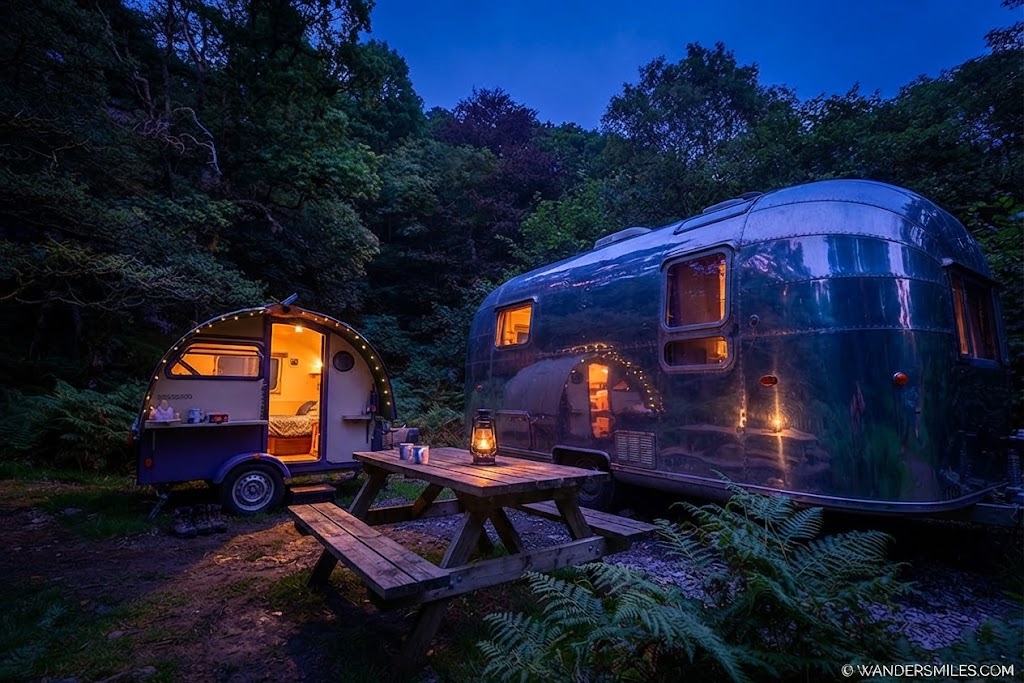
TL;DR
- Luxury pods mean en-suite plus hot tub, and cost £240–£400 a night. That is the honest definition, whatever the listing says.
- Dog friendly pods are common — roughly half the Lakeland stock — at £8–£15 per dog per night.
- Adult only sites buy quiet. Worth it if you are here to sleep and walk, pointless if you have children.
- Camping pod and glamping pod describe the same building. The label signals tier, not structure.
- Whinlatter and Grizedale for mountain biking; Catbells, Helvellyn and the Old Man of Coniston for the fells.
Introduction to Glamping Pods in the Lake District
What Are Glamping Pods?
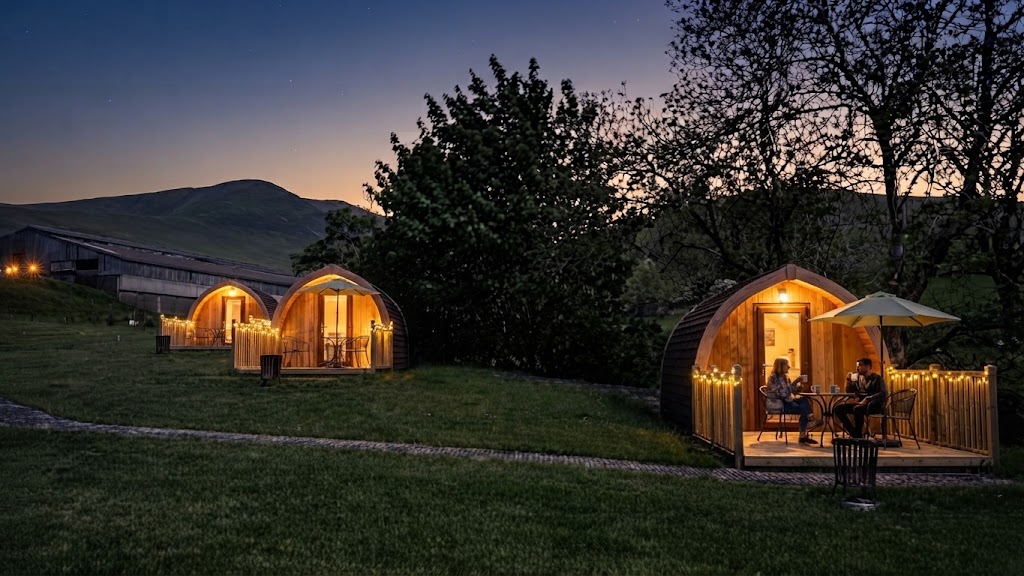
A glamping pod is a curved insulated timber cabin, roughly 3 metres by 5 metres, sleeping two to four people. It has a floor, a bed, mains power, lighting and a heater. The arched roof is engineering rather than styling: it sheds Cumbrian rain and takes wind off the fells without flexing.
Pods took over Lake District glamping for three overlapping reasons. They survive the climate, which canvas struggles to do here. They fit national park planning policy, which favours small, low-impact and reversible development. And they let a farmer convert an unproductive corner of a field into revenue without building a house.
The result is several hundred small pod operations across Cumbria, most with one to six units. Unique features that distinguish pods from other glamping structures:
- Year-round season. Insulation and electric heat mean January is viable.
- Genuine weatherproofing. Heavy rain is inaudible and irrelevant.
- Lockable door. Sounds trivial until you have left a laptop in a bell tent.
- Sound privacy. Timber walls beat canvas comprehensively.
- Compact footprint. Which is also the main drawback.
Why Choose the Lake District for Glamping?
England's largest national park packs sixteen lakes, 214 Wainwright fells and Scafell Pike's 978 metres into 2,362 square kilometres of Cumbria. UNESCO listed the whole cultural landscape in 2017. Roughly 15 to 18 million people visit each year, and a striking number of them come specifically to walk.
For anyone who likes being outdoors, the appeal is the ratio of landscape to distance. In a single week from one pod you can climb England's highest mountain, swim in a glacial lake, ride waymarked forest singletrack, sail a dinghy and stand in a Neolithic stone circle. Very little of Europe compresses that much variety into an hour's drive.
Wildlife is part of it too, and it is why this site is named the way it is. Cumbria holds one of England's surviving red squirrel populations, concentrated in the conifer plantations around Whinlatter, Grizedale and Ennerdale. You also get red deer on the eastern fells, ospreys at Bassenthwaite in season, and Herdwick sheep in essentially every direction.
Exploring Luxury and Specialized Glamping Options
Luxury Lake District Pods
Luxury pods are a distinct product rather than a marketing gloss, and they cost £240 to £400 a night. Features that define the tier:
- En-suite bathroom. Shower, WC, basin, inside the pod. Non-negotiable at this level.
- Private hot tub. On your own decking, screened from the neighbours.
- Proper kitchenette. Induction hob, fridge, sink, crockery, sometimes a small oven.
- Thermostatic heating, often underfloor rather than a panel heater.
- King bed, made up, with real linen and towels.
- Larger footprint, typically 4m by 6m or a two-room design.
- Decking with furniture that is not a plastic picnic bench.
The exclusivity comes from unit count as much as fittings. Luxury pod sites usually run one to four units on several acres, which means you may see nobody for two days. That privacy is what the money actually buys. A fitted-out pod on a thirty-unit campsite is not a luxury stay regardless of the shower.
Is it worth it? For a two-night anniversary in October, yes without hesitation. For a week in August with children, no — put the money into a safari tent and get floor space instead. More on the top end at luxury glamping.
Dog-Friendly Glamping Pods
Dog friendly pods are widespread in Cumbria, and the reason is structural: pods have hard floors, wipeable surfaces and no carpet. A wet spaniel does far less damage in a pod than in a cottage.
Roughly half of Lakeland pod sites accept dogs. What to expect:
| Item | Typical position |
|---|---|
| Fee | £8–£15 per dog per night, occasionally per stay |
| Number allowed | Usually two, sometimes one, rarely three |
| Left unattended | Almost never permitted |
| On the bed | Discouraged; some sites supply a throw |
| Enclosed area | A minority have a fenced dog paddock. Ask |
| Provided | Bowl, towel and treats at the better sites |
Benefits for owners are obvious and material: no kennel fee, no guilt, and a walking companion in a region where walking is the point. Fell paths in the Lake District are almost entirely dog-accessible, unlike many National Trust properties and some nature reserves.
Practical advice for travelling with a dog here:
- Herdwick sheep are everywhere and lambing runs roughly March to May. Lead on, always, no exceptions.
- Cattle with calves are the real danger on Lakeland paths. If cattle approach, let the dog off the lead.
- Bring two towels and a dedicated drying mat. Pods have no drying room.
- Check the pub before you count on it. Most Lakeland pubs take dogs, not all.
- Blue-green algae in late summer is toxic to dogs. Do not let them drink from still, scummy water.
- Ticks are common in bracken. Check ears and armpits nightly.
Details and site-by-site notes on dog friendly glamping pods and dog friendly glamping generally.
Adult-Only Glamping Pods
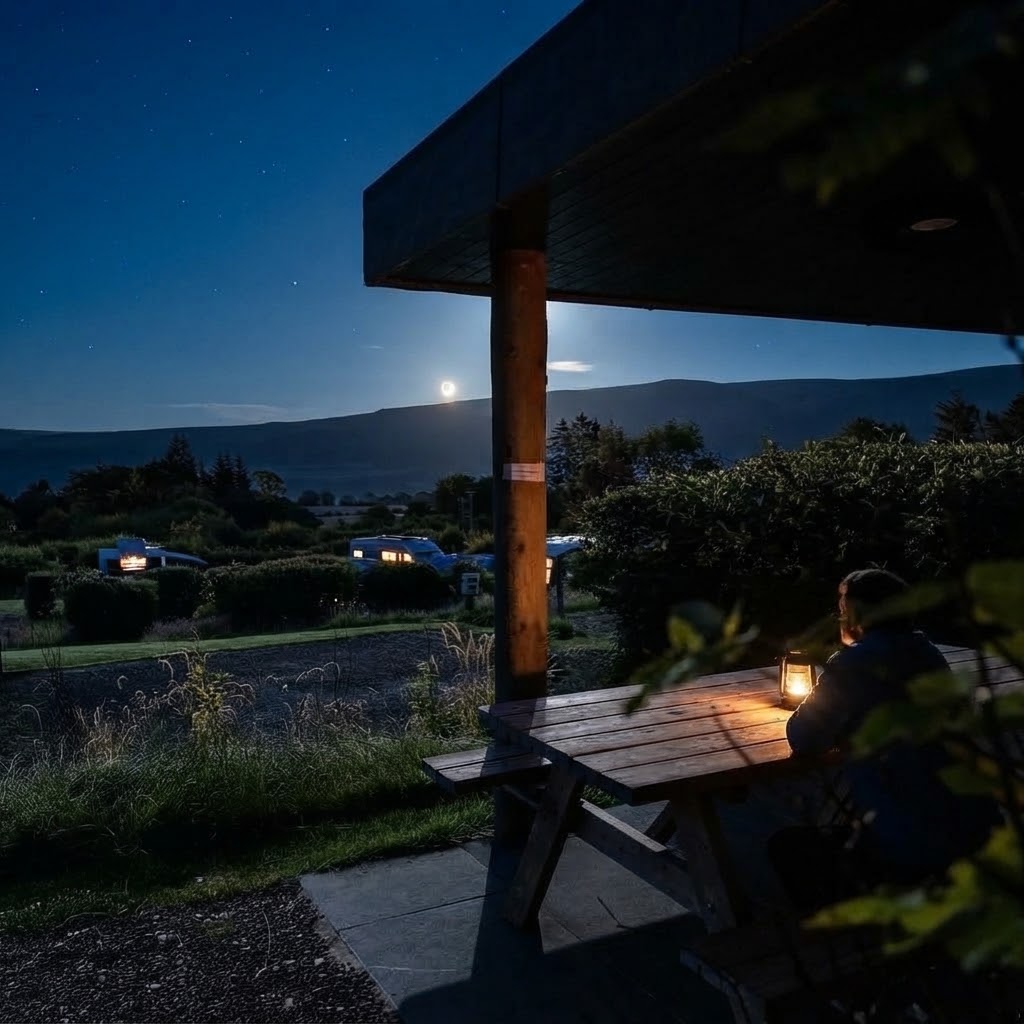
Adult only glamping means exactly what it says: the site refuses bookings that include under-18s, sometimes under-16s. It is a deliberate positioning choice, common at small couples-focused sites in the Eden, Lyth and Winster valleys.
What you get for it:
- No dawn noise. This is the main product.
- No ball games, scooters or shrieking near the hot tub.
- Later, quieter evenings, since nobody is doing a bedtime routine at seven.
- Facilities that stay clean, because the load is lower.
- A generally more considered fit-out, since the site is not childproofing anything.
Locations where adult only pods concentrate: the Eden Valley near Penrith, the Lyth and Winster valleys south of Windermere, the Cartmel peninsula, and scattered single-unit sites on the western fringes. They rarely appear in the busy central valleys, where the economics favour volume.
Rates sit £20 to £40 above equivalent family sites. Our view: for a couple travelling in school holidays, that premium is the best value in Lake District glamping. Outside school holidays it matters much less.
Comparing Glamping Pods to Traditional Camping
Glamping vs. Traditional Camping Pods
The two terms describe the same structure and different levels of finish. Nobody polices the vocabulary, so read the specification.
| Marketed as "camping pod" | Marketed as "glamping pod" | |
|---|---|---|
| Bed | Mattress, often bring your own bedding | Made up, linen and towels |
| Bathroom | Shared amenity block | En-suite, or private and adjacent |
| Kitchen | None, or a kettle | Kettle, fridge, hob, sink |
| Heat | Basic panel heater | Thermostatic, sometimes underfloor |
| Setting | Pod field on a campsite | Spaced units, often on a farm |
| Nightly rate | £95–£145 | £160–£400 |
| Audience | Walkers, families, first-timers, budget trips | Couples, short luxury breaks, anniversaries |
Neither is better. A basic camping pod at £105 with the shower block forty metres away is excellent value for two walkers who will be out from nine until six. A luxury pod at £320 is a terrible deal for the same two people and a superb one for a couple celebrating something.
Against a tent, both win on every measure except price and the specific pleasure of pitching in a wild spot. Against a cottage, both lose on space and win on setting.
Spotlight on Specific Glamping Providers
Gillcumber Glamping Pods Experience
Gillcumber Glamping Pods appears regularly in Lake District pod searches, and it is representative of a particular Cumbrian model: a small farm-based operation with a handful of units, run by the people who own the land.
What that model reliably delivers, at Gillcumber and at the dozens of sites like it:
- Space between units. Two to six pods spread across an acre or more, rather than a grid.
- Owner contact. The person who replies to your email is the person who cleans the pod.
- Local knowledge. Ask which fell to walk in a north-easterly and you get a useful answer.
- Quiet. No entertainment programme, no bar, no arcade.
- Variable web presence. The website may look like 2011. This says nothing about the pods.
What it does not deliver: shops, swimming pools, evening activities, or a member of staff at 11pm. If something breaks, it gets fixed when the owner is available.
Feedback for small Cumbrian pod sites follows a consistent shape. Warm reviews for the welcome, the setting and the value. Recurring complaints about mobile signal, distance to the nearest shop, and single-track access lanes that are alarming in a wide car. All of that is inherent to the model rather than a failing of any one operator.
Our general advice on this category: they are the best value in Lake District glamping, and you should judge them on the owner's email reply rather than their website. See more named operators in site reviews.
Outdoor Activities Near Glamping Pods
Cycling Routes in the Lake District
Cycling in the Lakes splits cleanly into forest trail centres and road riding, and the two suit different pod locations.
| Route or centre | Type | Difficulty | Nearest pod cluster | Notes |
|---|---|---|---|---|
| Grizedale Forest | Waymarked MTB | Green to black | Coniston, Hawkshead | North Face Trail is the classic. Bike hire on site |
| Whinlatter Forest | Waymarked MTB | Blue to red | Keswick, Braithwaite | Altura Trail. England's only true mountain forest |
| Ennerdale & Ullswater bridleways | Off-road touring | Moderate | Pooley Bridge, Ennerdale | Long, remote, gravel bike territory |
| Lyth & Winster valley lanes | Road | Rolling | Kendal, Bowland Bridge | Quiet, hedged, damson blossom in April |
| Kirkstone Pass | Road climb | Hard | Ambleside, Windermere | The Struggle. 20% ramps. You will remember it |
| Honister and Newlands | Road climbs | Very hard | Keswick, Borrowdale | Classic Lakeland loop, 25% sections |
Tips for cycling here: the A591 and A592 carry heavy summer traffic and are unpleasant on a bike, so plan around them. Descents are steep and often wet, so check your brakes properly. Take a spare tube and a pump, because bike shops are in the towns and not the valleys. And ask the pod owner where you can lock a bike overnight — most have a shed, few advertise it.
Hiking the Fells: A Glamping Adventure
Fell walking is the reason most people book a Lake District pod. The best walks near pod clusters:
- Catbells, 451m, from Keswick or Grange. Two hours, ridge the whole way, the finest short walk in England.
- Latrigg, 368m, from Keswick. An hour, buggy-friendly from the top car park, huge view.
- Helvellyn, 950m, via Striding Edge from Glenridding. Six hours, genuine scrambling, not for a windy day.
- Scafell Pike, 978m, from Wasdale Head. Five hours, England's highest, a rubble climb rather than a beautiful one.
- Old Man of Coniston, 803m, from Coniston. Four hours, old mine workings, a tarn on the way up.
- Hallin Fell, 388m, from Howtown. Forty minutes for the best Ullswater view there is.
- Blencathra, 868m, via Hall's Fell Ridge. Four hours, exposed, superb.
Wildlife you may actually see: red squirrels in the conifer plantations, buzzards constantly, ravens on the crags, ospreys at Bassenthwaite between April and August, red deer in the far east of the park, and Herdwick sheep with a proprietorial attitude to the path.
Safety, briefly and seriously. Cumbrian weather changes fast and the fells kill people every year. Carry waterproofs, a map and compass you can use, food, water and a head torch. Check the Met Office mountain forecast rather than a town forecast. Tell someone your route. Turn back when it stops being fun rather than when it becomes dangerous. Mountain Training and the National Park Authority both publish free guidance for people new to the hills.
Questions people ask
What counts as a luxury glamping pod?
En-suite bathroom and a private hot tub, at minimum. Add underfloor heating, a proper kitchenette, a king bed and decking and you are at the top of the Lakeland market. Anything calling itself luxury without a private bathroom is stretching the word.
Are most Lake District camping pods dog friendly?
Roughly half, which is a high share by UK accommodation standards. Fees run £8 to £15 per dog per night, usually capped at two dogs. Some sites restrict breeds or numbers, and very few allow dogs to be left alone in the pod.
Why choose an adult only glamping site?
Noise, mainly. A site with no children has no 6am shrieking, no football against your pod and no queue at the shower block. If you are walking hard and sleeping early, it is worth a premium. If you have children, it is obviously irrelevant.
Is there a difference between a camping pod and a glamping pod?
Not structurally. Both are curved insulated timber cabins. The words signal tier: "camping pod" tends to mean simpler and shared facilities, "glamping pod" tends to mean en-suite and made-up beds. Judge the amenity list, not the noun.
Can you cycle straight from a Lake District glamping site?
Sometimes. Sites near Grizedale, Whinlatter and the Lyth Valley put you on rideable ground within minutes. Sites in the central valleys usually mean a drive to the trailhead, because the A591 is not a road you want to ride with children.