Operators
Discover Herdwick Cottages: Lake District Cottages, Lodges & Glamping
Agencies and multi-site brands cover a large share of Lakeland self-catering, glamping included. What Herdwick Cottages actually is, what it lists, and when an agency beats booking direct.
TL;DR
- Herdwick Cottages is a Cumbrian self-catering agency, listing holiday cottages, lodges and glamping across the Lake District rather than owning them.
- Its advantage is range: cottages, family lodges and glamping units in one search, with consistent descriptions.
- Cottages £140–£350 a night with three-night minimums; lodges £180–£400; glamping £110–£280.
- Use an agency when you need a specific combination of beds, dogs, hot tub and location. Book direct when the property is a single glamping unit.
- Named after the Herdwick sheep, Cumbria's native breed and the reason the fells look the way they do.
Introduction to Herdwick Cottages
What is Herdwick Cottages?
Herdwick Cottages is a Cumbria-based self-catering letting agency. It is worth being clear about the model, because the name reads like a single property and it is not: the agency markets and administers bookings for accommodation owned by other people, across the Lake District and the wider county.
The name comes from the Herdwick, Cumbria's native mountain sheep. Herdwicks are hardy, slate-grey as adults and born black, and they are hefted — flocks learn their own patch of fell and stay on it without fencing, knowledge passed from ewe to lamb. Beatrix Potter bred them at Hill Top and left her flocks and 4,000 acres to the National Trust on condition the breed continued. They are the single most important reason the Lakeland fells look the way they do.
What an agency of this kind actually does:
- Markets the property, with professional photography and consistent descriptions
- Handles bookings and payments, including deposits and balances
- Provides guest support before and during the stay
- Applies its own standards to inventory and presentation
- Does not own or operate the properties. Cleaning, maintenance and the actual welcome come from the owner
That structure has real consequences for guests. Descriptions are more consistent than they would be on a small owner's own website. But the person who fixes a broken heater is the owner, not the agency, and the agency's ability to solve a problem on a Sunday evening is limited.
Accommodation Types Offered
Explore Holiday Cottages
Holiday cottages are the core of the Cumbrian self-catering market and the agency's original business.
What a Lake District cottage typically is: a stone-built house or converted barn, often eighteenth or nineteenth century, with thick walls, small windows, low doorways and a slate roof. Two to four bedrooms, a full kitchen, a sitting room with a wood burner, and frequently a garden. Sizes run 50 to 120 square metres.
| Typical | |
|---|---|
| Nightly rate | £140–£350 |
| Minimum stay | 3 nights, often 7 in peak weeks |
| Changeover | Fixed Friday or Saturday in season |
| Sleeps | 4–8 |
| Kitchen | Full, including oven and dishwasher |
| Laundry | Washing machine, sometimes a dryer |
| Heating | Central, plus a wood burner |
| Dogs | Around a third accept them, £25–£50 per stay |
Where cottages beat glamping: space, a bath, a washing machine, a dishwasher, somewhere to dry six pairs of boots, and the ability to house eight people without anyone sleeping in a corridor. On a wet week with children, those things matter enormously.
Where cottages lose: the three-night minimum, the fixed changeover day, the price for two people, and position. A cottage is in a village or on a lane. A pod is in a field with a view a cottage could not get planning permission for.
Family-Sized Lodges for Group Stays
Family-sized lodges occupy the middle ground and are the fastest-growing category in Cumbrian self-catering.
A lodge is a purpose-built timber unit, typically 45 to 90 square metres, with two or three bedrooms, a full bathroom, an open-plan living and kitchen area, decking, and very often a private hot tub. Construction is modern, so insulation and glazing are better than in a period cottage — which in Cumbria is a serious advantage.
- Rate: £180–£400 a night
- Sleeps: 4–8
- Minimum stay: usually 2–3 nights, more flexible than cottages
- Position: often on holiday parks or estate grounds rather than in villages
- Hot tub: frequently included, which cottages rarely offer
- Accessibility: generally single-storey and step-free, unlike most period cottages
Lodges suit multi-generational groups better than either cottages or glamping. Grandparents get a level floor and a proper bathroom; children get bedrooms; everyone gets the hot tub. The trade is character — a lodge on a park is comfortable and generic where a converted Lakeland barn is neither.
Glamping Options for Unique Experiences
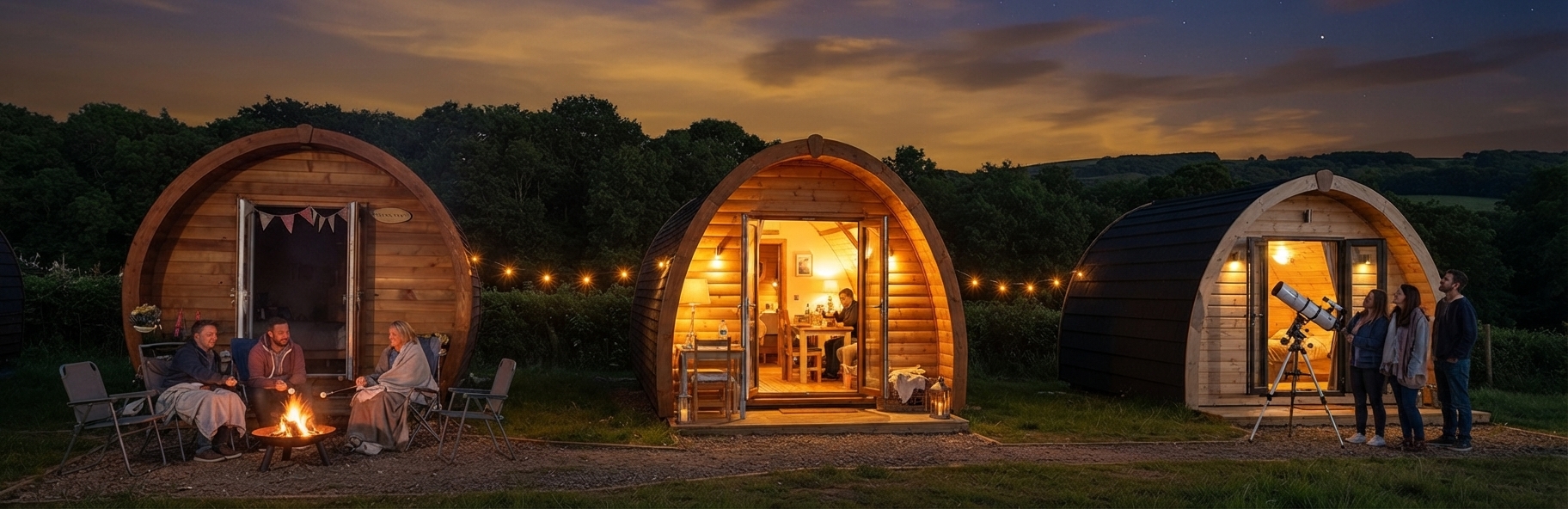
Agencies have added glamping to their portfolios over the past decade, for two reasons. Demand grew sharply, and farm owners already letting a cottage through an agency naturally put their new pods through the same channel.
What you will find listed:
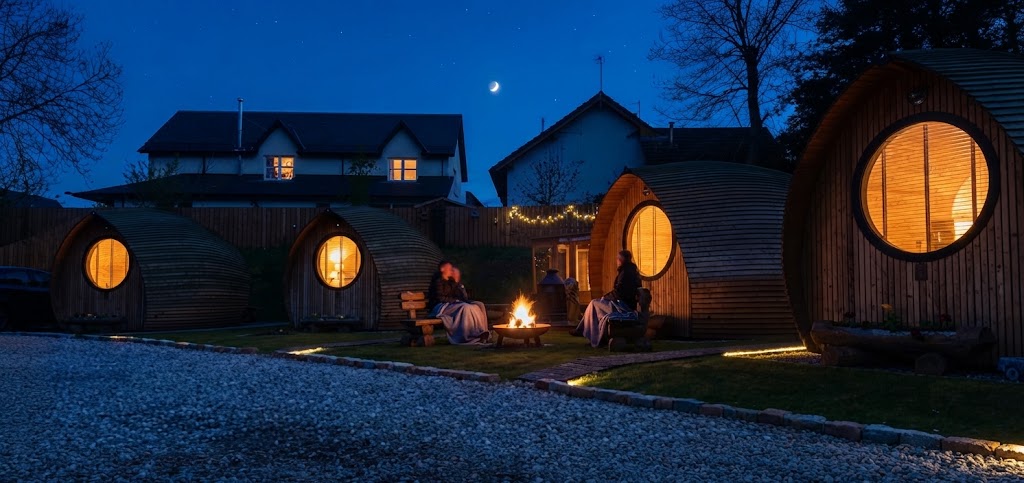
- Glamping pods, £110–£260, sleeping 2–4, often year round
- Shepherd's huts, £140–£260, sleeping 2, with a log burner
- Safari tents, £170–£290, sleeping 6–8, April to October
- Yurts, £120–£220, sleeping 4–6, April to October
- Cabins and small lodges, £140–£280
- Occasional one-off structures — converted horseboxes, earth-sheltered units, treehouses
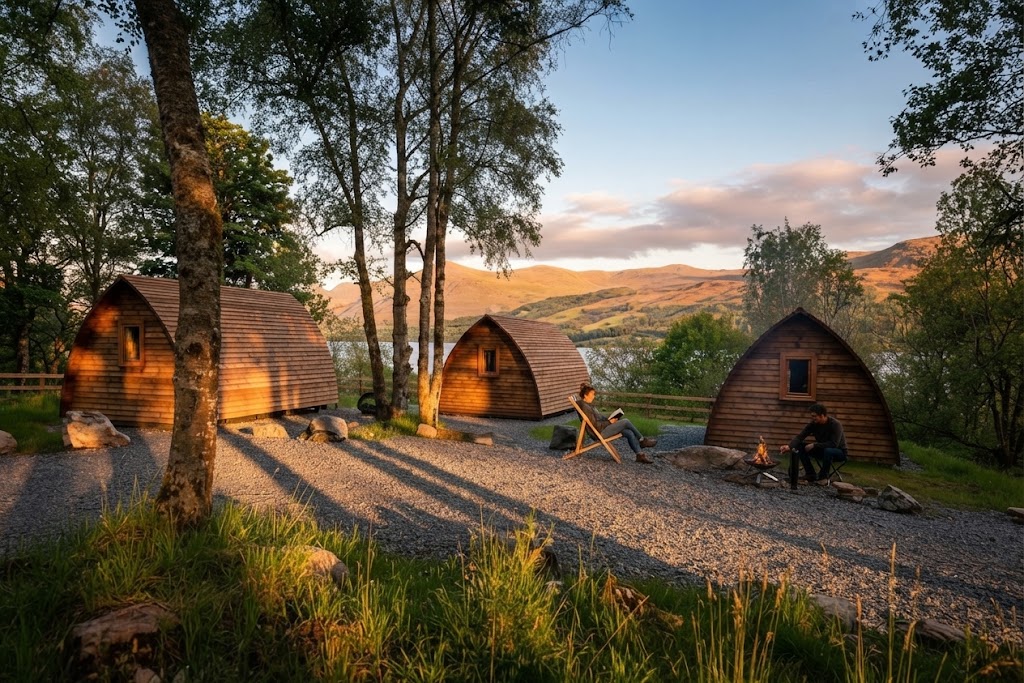
Beyond Herdwick, other names worth knowing in this space. Wigwam Holidays operates a franchise network of insulated timber cabins — the original "wigwam" pods — with several Cumbrian sites and a consistent specification across all of them. The Quiet Site above Ullswater runs its own unusual accommodation including earth-sheltered burrows. Experience Freedom, the Camping and Caravanning Club's glamping arm, operates sites including Troutbeck Head. And Canopy & Stars curates the design-led end. We cover several individually in our site reviews section.
Location and Scenic Beauty
The Allure of the Lake District
England's largest national park covers 2,362 square kilometres of Cumbria, holding sixteen major lakes, several hundred tarns, 214 fells catalogued by Alfred Wainwright, and the country's highest ground at Scafell Pike, 978 metres. UNESCO inscribed the whole cultural landscape as a World Heritage Site in 2017, specifically citing the interaction of hill farming, industry and Romantic-era ideas about landscape.
That inscription is relevant to an agency named after a sheep. The Lakeland landscape is agricultural, not wild: the open fells look the way they do because Herdwicks have grazed them for a thousand years. Wordsworth wrote about it, Ruskin theorised about it and Beatrix Potter bought farms to protect it. The self-catering economy sits on top of a working farming landscape, and most of the cottages and pods you can book are on farms that still keep sheep.
Where properties concentrate: the Windermere and Ambleside corridor, Keswick and Borrowdale, Coniston and Hawkshead, Grasmere and Langdale, Ullswater and Pooley Bridge, the Cartmel peninsula, and the Eden Valley on the eastern fringe.
Accommodations with Spectacular Views
Views are the most oversold attribute in Lakeland self-catering, so it is worth knowing what the phrases mean.
| Listing says | Usually means |
|---|---|
| "Lake views" | Water visible from at least one window, possibly through trees |
| "Views towards the lake" | You can see in the direction of the lake |
| "Fell views" | Reliable. There are fells in most directions |
| "Panoramic views" | Usually genuine, and usually means elevated ground |
| "Set in stunning countryside" | No particular view. Nice surroundings |
| "Lakeside" | Anything from 50 metres to a mile |
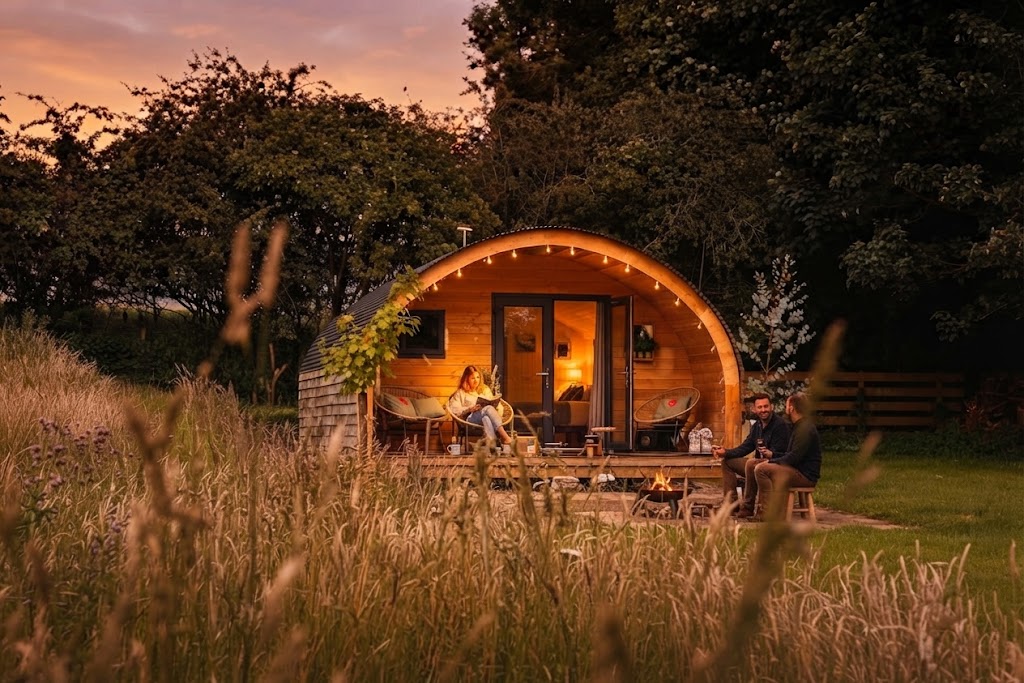
Practical advice: ask which direction the main windows face and what is between them and the view. West-facing matters most, because Cumbrian evening light across water or fellside is the thing people remember. Glamping units generally have better views than cottages, for the simple reason that pods get sited for the view and cottages were built where the water and the road were.
Amenities and Comfort
Modern Amenities for a Comfortable Stay
What "modern amenities" should mean in a Cumbrian let, and what to verify:
- Heating that works properly. In a period cottage this is the single biggest variable. Ask whether it is oil, LPG, electric or a heat pump.
- Wood burner with fuel included, or clearly priced.
- Washing machine, and ideally a dryer. On a wet Lakeland week this is the most valuable appliance in the property.
- Dishwasher, in cottages and lodges.
- WiFi, which in Cumbrian valleys ranges from fibre to nothing. Verify rather than assume.
- Mobile signal, which is a separate question and often worse.
- Hot tub, and whether it is private, how it is heated, and if there is a separate charge.
- Parking, and how far from the door.
- EV charging, increasingly available and worth asking about.
- Boot room or drying space. Rare and enormously valuable.
Glamping units are simpler and the questions are different: is the bed made up, is the bathroom private, can you cook, is the tub private, and how far to the facilities.
Cosy Cottage Retreats
The word "cosy" appears in Lakeland listings more than any other, and it is doing two jobs. Sometimes it means genuinely snug — thick stone walls, a wood burner, deep window reveals, low ceilings, the accumulated comfort of a building that has kept people warm for two hundred years. Sometimes it means small.
How to tell the difference: check the floor area in square metres if given, count the bedrooms against the stated occupancy, and look at the photographs for a wide-angle giveaway. A room photographed from a doorway with a fisheye lens is a small room.
What genuinely makes a Cumbrian cottage cosy in the good sense:
- A working wood burner with a decent flue and logs supplied
- Thick stone walls, which hold heat once warm
- A snug or second sitting room, so people can separate
- Deep window seats
- Underfloor heating in a converted barn, which many now have
- Somewhere to put wet coats that is not the kitchen
Luxury and Booking Information
Luxury Cottages in the Lake District
The luxury cottage segment in Cumbria runs £280 to £700 a night and is a genuinely different product from a standard let.
What defines it:
- Architect-led barn conversions or restored country houses
- Private hot tub, sauna or both
- Four to six bedrooms, most of them en-suite
- A kitchen a competent cook would be happy in
- Grounds rather than a garden
- Underfloor heating throughout
- Often a games room, cinema room or boot room
- Exclusive position — end of a private lane, no neighbours
Against luxury glamping at £240–£450 a night: the cottage gives you space, a kitchen, a bath and bedrooms; the glamping unit gives you a field, a view and a lower total for two people. For eight people the luxury cottage is dramatically better value per head. For two people it is not.
How to Book Your Stay with Herdwick Cottages
Booking through an agency:
- Search by requirement, not by property. Bed count, dogs, hot tub, accessibility, area. This is what agencies are genuinely good at.
- Read the full property description, not the summary. Agencies are consistent, which makes the detail reliable.
- Check the minimum stay and changeover day before anything else.
- Confirm the dog policy and fee in writing if relevant.
- Check what is included: heating, logs, linen, towels, hot tub, final clean.
- Note the deposit and balance dates, typically 25–30% then the balance six to eight weeks out.
- Read the cancellation terms, which for cottages are usually stricter than for glamping.
- Save the owner's contact details as well as the agency's, because the owner is who you will need on the day.
When to use an agency and when not to. Use one when you have a specific combination of requirements to satisfy — six beds, two dogs, a hot tub, near Keswick, accessible ground floor — because filtering forty properties in one place beats emailing forty owners. Go direct when the property is a single glamping unit on a farm, because the owner can offer a single night, an early arrival and a laid fire that no agency system can process.
Our overall read on the agency route: genuinely useful for cottages and lodges, less necessary for glamping, and never worse than the platforms. Compare with the operators covered in site reviews.
Questions people ask
What is Herdwick Cottages?
A Cumbria-based self-catering letting agency. It markets and books holiday cottages, lodges and glamping units on behalf of the owners rather than owning them itself. You book through the agency; the property is run by whoever owns it.
Is it cheaper to book through an agency or direct with the owner?
Often similar on headline price, because agencies impose rate parity. Direct booking wins on flexibility — single nights, early arrival, extra dogs. Agency booking wins on search: comparing forty properties by bed count, dog policy and hot tub in one place.
Why is it called Herdwick?
After the Herdwick, Cumbria's native mountain sheep. Herdwicks are hefted to particular fells, meaning flocks know their own ground and stay on it without fencing. Beatrix Potter bred them and left her flocks to the National Trust. They are the reason the Lakeland fells look grazed rather than wooded.
Do agencies list glamping as well as cottages?
Increasingly, yes. Cumbrian agencies have added pods, shepherd's huts and lodges alongside cottages because demand for them grew and because farm owners already using an agency for a cottage put their pods through the same channel.
What is the minimum stay for a Lake District cottage?
Three nights is common and seven is standard in peak weeks, with fixed Friday or Saturday changeovers. Glamping units are more flexible, usually two nights, which is one reason people choose them for short breaks.