Choosing well
Discover Glamping in the Lake District: A Luxurious Outdoor Experience
The accommodation itself, examined properly. What separates a pod from a safari tent, why a proper bed costs so much, and how to read a listing before you commit two nights and £340.
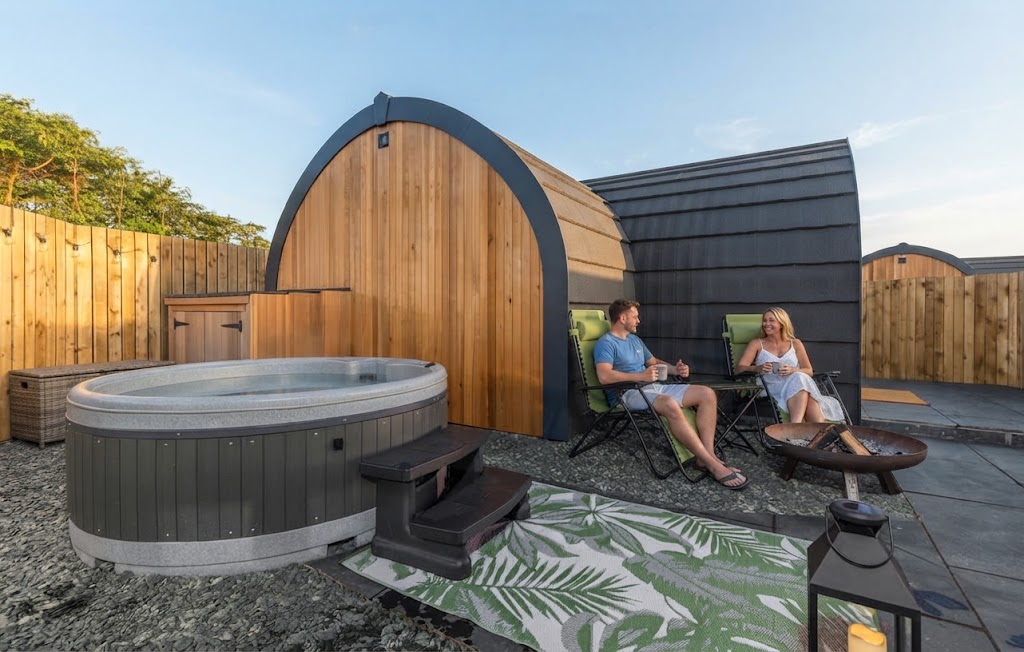
TL;DR
- Two details separate the tiers: whether the bed is made up, and whether the bathroom is yours. Everything else in a listing is secondary.
- Glamping pods suit couples and short breaks. Safari tents suit families and week-long stays.
- Wood-fired hot tubs take two to three hours to heat and cost the operator almost nothing to run. Electric tubs are instant and jetted.
- Windermere gives you the boats, the train and the restaurants, at a 15–25% price premium over the quieter valleys.
- Read the amenity list twice and email one specific question. That single email predicts the stay better than any review.
Introduction to Glamping in the Lake District
What is Glamping?
Glamping describes accommodation that keeps the outdoor setting of camping and removes the physical discomfort. The structure is permanent or semi-permanent, so it can be insulated, wired and furnished. You arrive with clothes and food rather than a tent and a stove.
The luxury element is real but narrow. Glamping gives you a bed, heat, power and a view. It does not give you space, storage, a bath or somewhere sensible to dry six pairs of socks. Anyone expecting a hotel room with a field attached will be briefly disappointed and then, usually, won over.
The Lake District is a natural home for it. England's largest national park holds sixteen lakes and 214 catalogued fells inside 2,362 square kilometres, and UNESCO inscribed the whole cultural landscape as a World Heritage Site in 2017. The attraction is not one view but the sheer number of them within twenty minutes of wherever you are sleeping.
What that means in practice: Wordsworth's Grasmere, Beatrix Potter's Hill Top, the Langdale Pikes, Aira Force, Scafell Pike at 978 metres, and roughly a thousand kilometres of public rights of way. Glamping puts you inside that rather than beside it.
Top Glamping Sites in the Lake District
Two names come up repeatedly in searches, and they sit at opposite ends of the market.
Inside Out Camping and Glamping works the canvas end. The proposition is bell tents and similar structures, pitched for a season, furnished with beds and basic furniture, aimed at people who want the outdoors without a spa bolted on. Shared facilities, fire pits, a sociable field. It costs materially less than a pod with a tub, and in July it is arguably the better experience.
Eden Heights Glamping sits in the Eden Valley near Penrith, on the drier eastern side of the park. Small unit count, private hot tubs, decking, views across farmland to the higher ground. The trade is distance: twenty to thirty minutes to Ullswater, closer to forty to Keswick.
Beyond those two, the recurring names in Cumbrian glamping include Wigwam Holidays sites, The Quiet Site above Ullswater, Rydal Hall's camping pods, and Herdwick Cottages as a booking agency with glamping stock. We cover them individually in site reviews.
Exploring Glamping Accommodations
Types of Glamping Accommodations
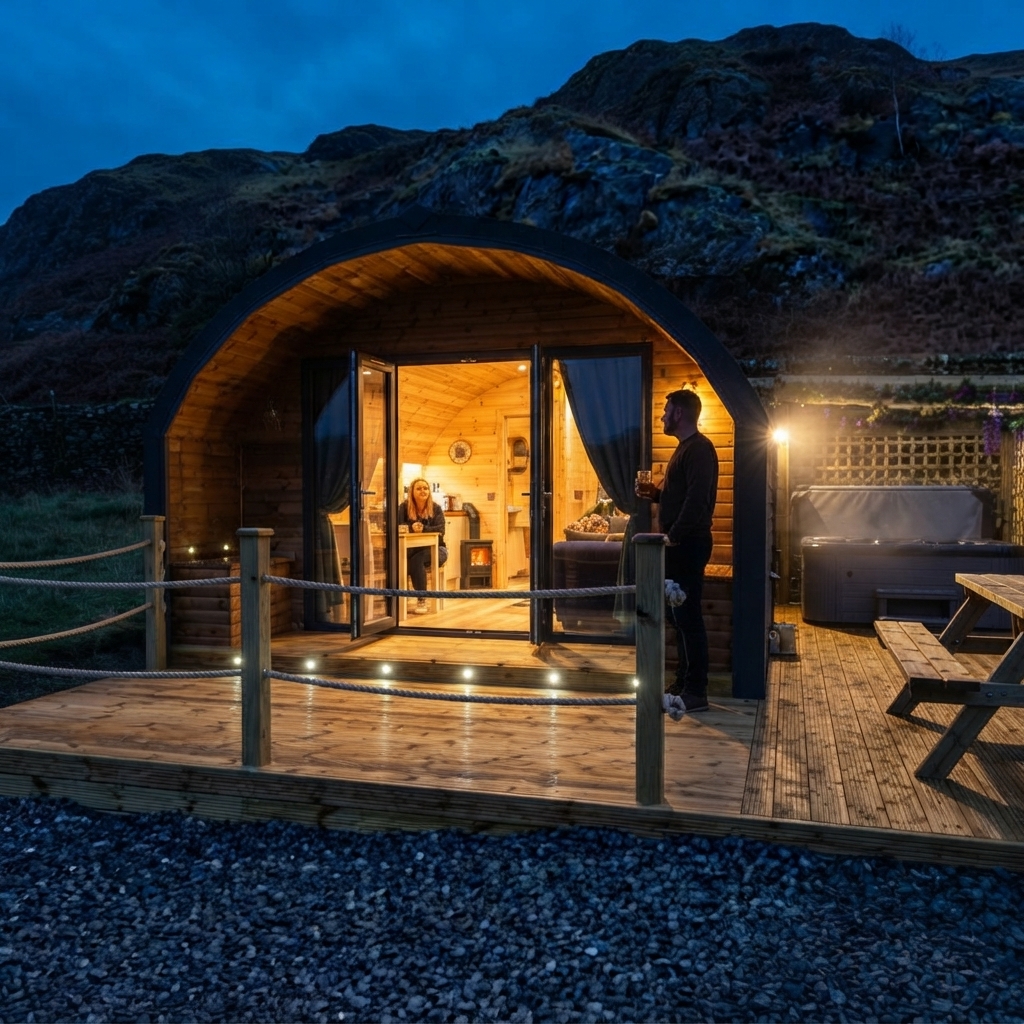
A glamping pod is a curved insulated timber shell, typically 3m wide and 5m long, with a door and window at one end. Construction is usually a laminated timber frame with sheep's wool or rigid insulation and a shingle or EPDM roof. The shape sheds rain and wind, which is the entire reason Cumbria adopted them so completely.
Pod features to expect:
- Double bed, sometimes with a bunk or sofa bed for children
- Two to four mains sockets and LED lighting
- An electric panel heater or oil-filled radiator
- A small table, two chairs, hooks, a shelf
- Sometimes a kettle, microwave and fridge; sometimes nothing
- Sometimes an en-suite shower room, which roughly doubles the rate
A safari tent is a different animal. Lodge-style canvas on a raised timber deck, 35 to 55 square metres, with internal partition walls creating two or three bedrooms, a sitting area and a kitchen with a sink, gas hob and fridge. A wood burner heats the main space. Sleeping capacity runs six to eight.
The appeal of safari tents is that a family can actually live in one. Children get their own room. Someone can cook while someone else reads. The deck seats everybody for dinner. That is a genuinely different holiday from four people negotiating 15 square metres of pod.
| Glamping pod | Safari tent | |
|---|---|---|
| Floor area | 12–18m² | 35–55m² |
| Sleeps | 2–4 | 6–8 |
| Bedrooms | Open plan | 2–3 partitioned |
| Kitchen | Kettle, sometimes a hob | Sink, gas hob, fridge, sometimes an oven |
| Heat | Electric panel | Wood burner |
| Season | Often year round | April to October |
| Nightly rate | £95–£240 | £170–£290 |
| Cost per head, full occupancy | £48–£60 | £28–£40 |
| Sound privacy | Good | Poor. Canvas is canvas |
Yurts sit between the two: circular, 20 to 38 square metres, one open space with a central stove, sleeping four to six. Shepherd's huts sit below both: two people, one room, wood burner, extremely romantic, no floor space at all. Detail on all four in huts, yurts and tents, or go straight to safari tents and pods.
Unique Features of Glamping
Two features do most of the work in turning camping into glamping.
Proper beds. The phrase appears in almost every Lakeland glamping listing and it means something specific: a raised frame, a real mattress, and in the mid tier and above, linen made up before you arrive. Compare that with a sleeping mat on a plywood platform, which some budget pods still offer. A made-up bed is the difference between a holiday you enjoy from minute one and an evening spent inflating things.
Where sites differ, and where the listing often goes quiet:
- Made up on arrival, linen and towels included — the mid and upper tier
- Linen available to hire, around £15 per person — the budget tier being honest
- Mattress only, bring everything — the budget tier being quiet about it
- Bed size: a "double" in a pod is sometimes a small double, 120cm rather than 135cm
Wood-fired hot tubs. A wood-fired tub is a timber or fibreglass barrel heated by an integrated stove, usually a submerged or side-mounted firebox. No pump, no filtration, no chemicals in most cases — drained and refilled between guests instead. Heating takes two to three hours from cold, which means you light it when you arrive and get in after dinner.
The experience is better than the specification suggests. There is no motor noise, the water smells of nothing, and tending a fire while the water climbs is a large part of the pleasure. Electric tubs win on convenience and jets, and lose on atmosphere.
| Wood-fired | Electric | |
|---|---|---|
| Time to temperature | 2–3 hours | Ready on arrival |
| Jets | No | Usually |
| Water treatment | Drained and refilled | Chemically dosed and filtered |
| Noise | Crackling | Pump hum |
| Typical nightly premium | £50–£80 | £70–£110 |
| Best for | Two or more nights, autumn, atmosphere | One night, aching legs, families |
Both raise the nightly rate more than any other single amenity. Our hot tub types page goes deeper, including the shared-tub problem.
Benefits of Glamping in Specific Locations
Glamping Near Windermere
Windermere is England's largest natural lake: 16.9 kilometres long, up to 64 metres deep, with a shoreline that has been developed since the railway arrived in 1847. That history is why Windermere is both the most convenient Lake District base and the busiest.
What sits within reach of a Windermere-area glamping site:
- The lake itself. Windermere Lake Cruises run between Bowness, Ambleside and Lakeside. Paddleboard and kayak hire is everywhere in summer.
- Fells. Orrest Head is a forty-minute walk from Windermere station and gives you the view that converted Wainwright. Wansfell and the Langdales are close.
- Attractions. The World of Beatrix Potter in Bowness, Hill Top at Near Sawrey, Wray Castle, Blackwell Arts and Crafts house.
- Food and shops. The densest concentration in the national park, from chip shops to a Michelin-starred kitchen at Cartmel nearby.
- The train. Windermere station connects via Oxenholme to the West Coast Main Line. You can glamp here without a car.
Why it stays popular: convenience, and the fact that a lake this size changes character with the light in a way the smaller waters do not. Why we would sometimes send you elsewhere: August traffic between Bowness and Ambleside is genuinely grim, and rates run 15 to 25% above the quieter valleys for equivalent accommodation.
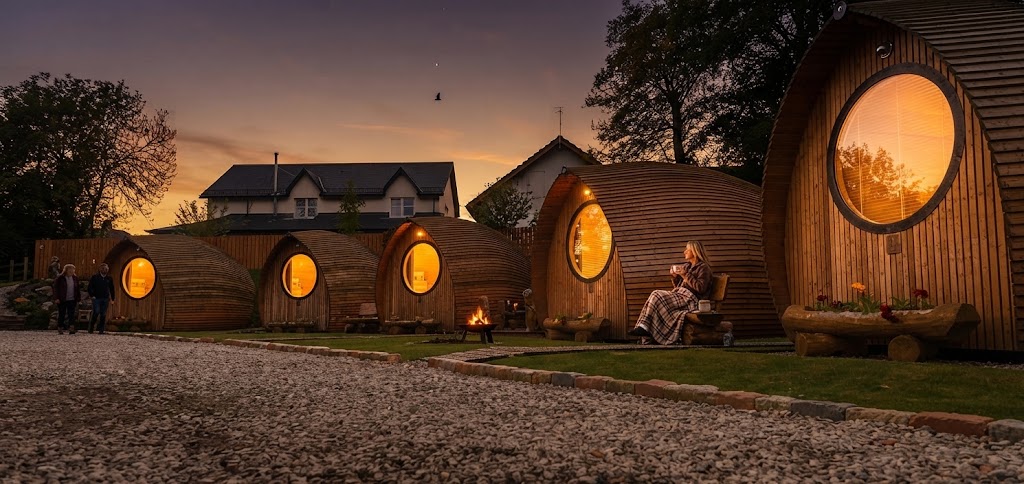
Glamping supply nearby clusters on the eastern and southern approaches rather than the shoreline, since lakeside development is restricted. Expect a walk or a short drive to the water. See Windermere glamping pods and Lake Windermere pods for the specifics, or compare all locations.
Planning Your Glamping Trip
How to Plan a Glamping Visit
Sequence matters more than research volume. Do these in order:
- Fix the dates first. Availability, not preference, will decide most of what follows.
- Decide on the hot tub. Yes or no sets your budget band immediately.
- Pick one valley. Splitting a five-night trip across two bases wastes a day in the car.
- Check travel. If you are coming by train, that limits you to the Windermere, Penrith and Oxenholme catchments unless the owner collects.
- Shortlist three sites, read their own websites. Aggregator copy is written by the aggregator.
- Email one specific question. "Is the bed made up and is the tub private?" The reply tells you how the site is run.
- Book direct and check the cancellation terms.
Visit Lake District is the official destination organisation and worth twenty minutes before you commit: events calendar, seasonal road closures, accessible route guides, public transport timetables. The Lake District National Park Authority publishes parking, ranger and conservation information, including which paths are under repair.
Comparing Glamping Experiences
Two sites at £180 a night can deliver very different weeks. Here is how the main options compare on value rather than price.
| Style | Example | Typical rate | Strength | Weakness |
|---|---|---|---|---|
| Canvas, shared facilities | Inside Out Camping and Glamping | £75–£130 | Price, atmosphere, sociability | Cold mornings, walk to the loo, summer only |
| Campsite pod field | Larger Lakeland campsites | £95–£160 | Facilities, shop, other children | Noise, density, generic feel |
| Small farm site with tubs | Eden Heights Glamping | £180–£280 | Privacy, hot tub, drier weather | Distance from the central fells |
| Family safari tent | South Lakes tent sites | £170–£290 | Space, kitchen, cost per head | April to October only, no sound privacy |
| Curated design property | Canopy & Stars listings | £250–£450 | Architecture, styling, genuine one-offs | Price, and it books out a year ahead |
Cost per head is the number people forget. A £280 safari tent sleeping eight is £35 each. A £150 pod sleeping two is £75 each. If you are travelling as a group, the expensive-looking option is often the cheap one.
Making a Booking Decision
Choosing the Best Glamping Site
Score any shortlist against these, in this order:
- Is the bed made up? If no, subtract £30 a night from your assessment of the value.
- Is the bathroom private? En-suite, private-but-outside, or shared. All three get sold as glamping.
- Is the hot tub private, and how is it heated? Shared tubs on a rota should cost less. They often do not.
- Can you cook, and where? Some pods ban all cooking inside for fire-safety reasons. Check whether there is a covered outdoor space, because it will rain.
- How far to food? A pub within walking distance changes every evening of the stay.
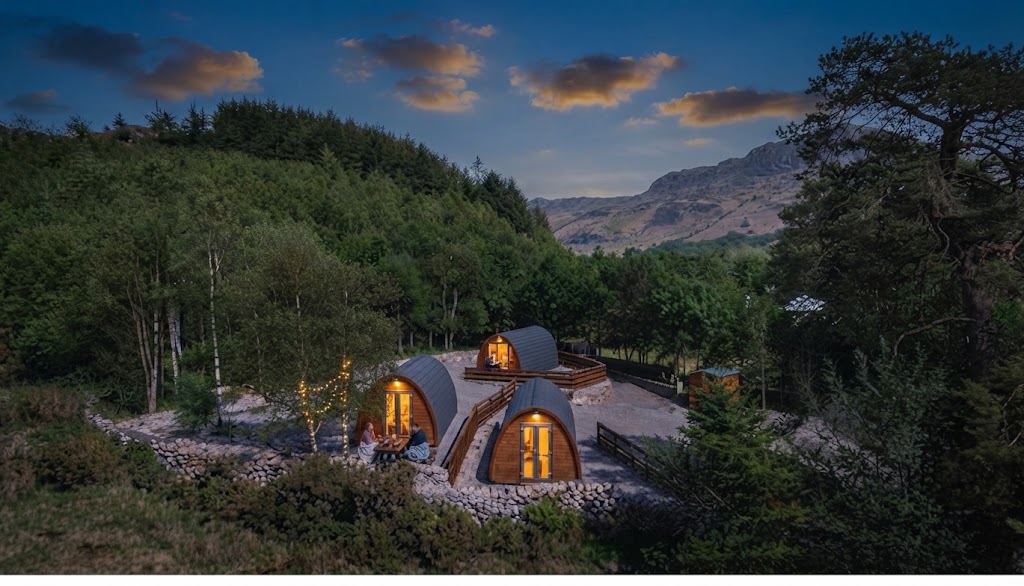
- What is the unit count? One pod on a farm is a different holiday from thirty in a field.
- What is the cancellation policy? Cumbrian weather makes flexibility worth paying for.
Recommendations by trip type, plainly:
- Two nights, couple, first time. En-suite pod or shepherd's hut with a wood-fired tub. Keswick or Ullswater. Late May.
- Week, family of five. Safari tent, South Lakes, July. Cost per head wins.
- Anniversary. Single-unit farm site, private tub, no neighbours, and pay the premium. See luxury glamping.
- Tight budget. Bell tent in July or a basic pod in March. Both work. See cheap glamping.
- With a dog. Confirm the fee, the number allowed and whether they can be left unattended. See dog friendly glamping.
Questions people ask
What does "proper beds" mean in a glamping listing?
A raised bed frame with a real sprung or foam mattress, usually a double or king, and in most cases made up with linen before you arrive. It is the phrase operators use to distinguish themselves from sites handing you a futon on a platform. If a listing says "bedding available to hire", the bed is not made up.
Are wood-fired hot tubs better than electric ones?
Different, not better. Wood-fired tubs give you a fire to tend, no chemical smell and a slow build to temperature. Electric tubs give you jets, instant heat and a thermostat. For one night, take electric. For three nights in autumn, wood-fired is the nicer ritual.
Can you glamp right on Windermere's shore?
Almost never. Shoreline development inside the national park is tightly controlled and most of Windermere's western bank is protected or privately held. Sites market themselves as "near Windermere" and mean a five to twenty minute walk or a short drive. Read the small print on distance.
Is a safari tent warm enough in April?
With the wood burner lit, yes, in the evening. Overnight it cools fast because canvas has almost no thermal mass. Bring a hat for sleeping and expect a cold walk to the loo. Most safari tent sites open around the start of April for exactly this reason — earlier is unpleasant.
How do I compare two glamping sites at the same price?
Score them on five things: bed made up, bathroom private, cooking allowed indoors, hot tub private, and walking distance to food. A site scoring five out of five at £180 beats a site scoring two out of five at £160 every time.