Specification & cost
Glamping Pods in The Lake District: Ensuite, Hot Tub and Cost Compared
The numbers page. What an en-suite actually adds, what hot tubs do to the rate, how two named pod operators differ, and what the booking process costs you in flexibility.
TL;DR
- En-suite adds £40–£80 a night. A private hot tub adds £60–£110. Together they roughly double a standard pod rate.
- Standard pods: £95–£160. En-suite: £160–£240. Luxury with tub: £240–£400.
- Carrock-style pods sit in the northern fells; Wallsend-style guest-house pods add breakfast and a building nearby. Different products.
- Book direct for flexibility, use platforms for search. Peak season needs four to six months' notice.
- Scenic setting is not correlated with price. Some of the best views cost the least.
Introduction to Glamping Pods in the Lake District
What are Glamping Pods?
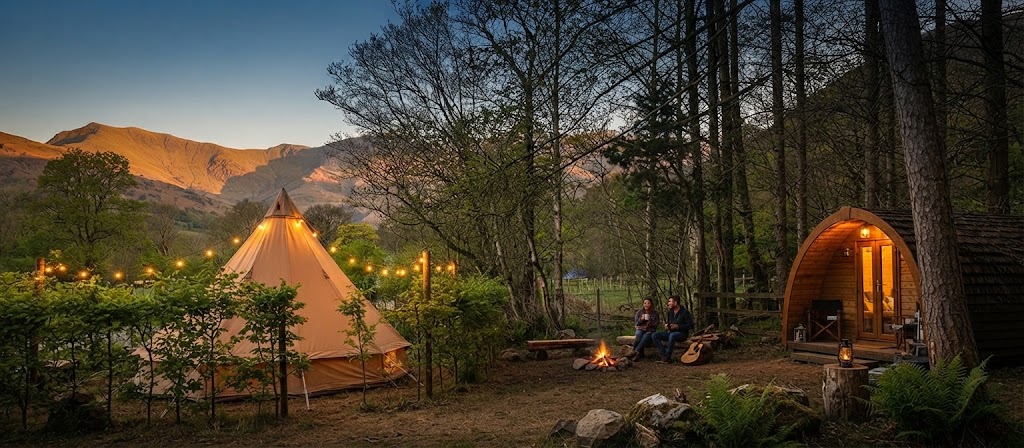
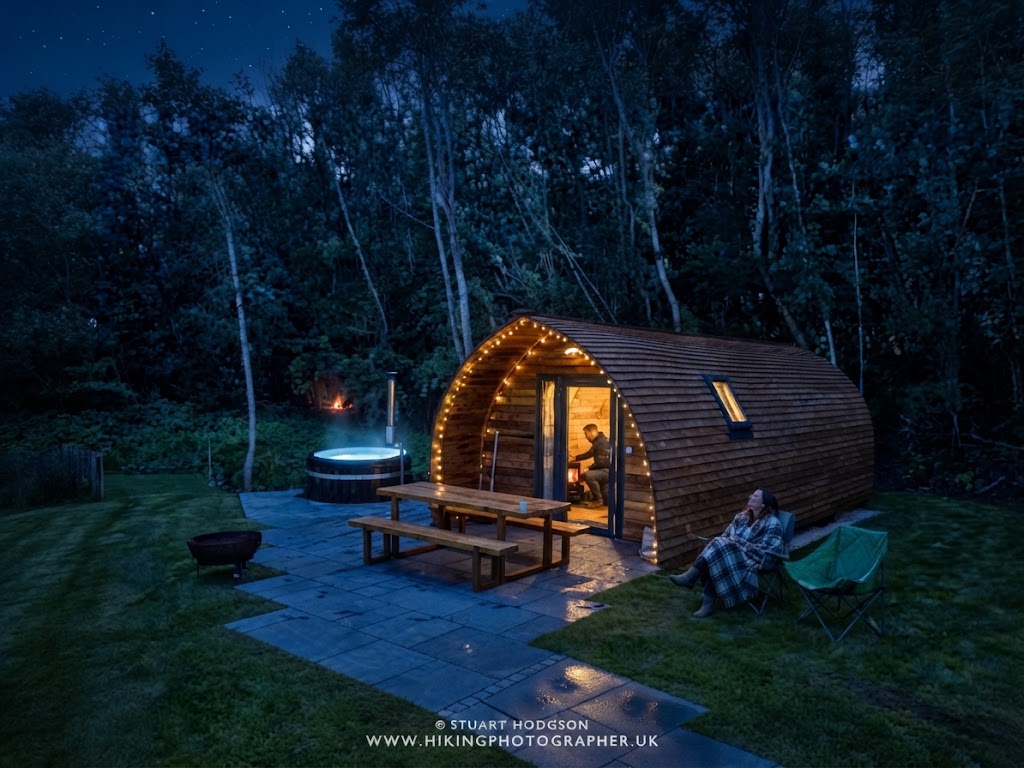
A glamping pod is an insulated timber cabin with a curved roof, generally 3m by 5m, containing a bed, power, lighting and heat. Cladding is usually larch or cedar. Roofs are shingle or EPDM. Insulation is rigid board or sheep's wool.
The unique features are all consequences of that construction. Because the shell is rigid and insulated, the pod works in February. Because it is timber, condensation behaves better than in canvas. Because it locks, you can leave your things and go up a hill.
Compared with traditional camping the difference is mostly about failure modes. A tent fails when the weather turns: wet groundsheet, broken pole, a night spent listening to the fabric. A pod does not have that failure mode. What it has instead is a small footprint and nowhere to put anything.
The appeal in the Lake District specifically: 15 to 18 million annual visitors compete for accommodation inside a national park where new building is tightly restricted. Pods slipped into that gap because they are demountable, low-impact and cheap to install. A farmer can put three pods in a field corner for less than the cost of converting a barn.
Location and Accessibility
The Lake District occupies 2,362 square kilometres of Cumbria in north-west England, bounded roughly by the M6 to the east, the Irish Sea to the west, Morecambe Bay to the south and the Solway plain to the north. Sixteen major lakes radiate from a central dome of volcanic rock, which is why every valley looks like a spoke.
Getting here:
- By train. Oxenholme and Penrith sit on the West Coast Main Line, roughly 2h40 and 3h10 from London. A branch line runs Oxenholme to Windermere.
- By car. M6 junctions 36, 40 and 44. Once inside the park, average speeds collapse to about 30km/h.
- By bus. The 555 runs Kendal–Windermere–Ambleside–Grasmere–Keswick and is genuinely useful. The 508 covers Penrith to Patterdale.
- By air. Manchester is around two hours by road; Newcastle about two and a half.
Pod accessibility varies a great deal and is worth asking about. Many sites sit up single-track farm lanes with passing places, which is fine in a hatchback and unpleasant in anything wide. Some pods are 200 metres from the nearest parking across grass. A handful are genuinely step-free with hard-surfaced paths, and those advertise it.
Scenic landscapes surrounding the pods divide by area. Northern sites look at Skiddaw and Blencathra across rough grazing. Ullswater sites get water and Helvellyn. Southern sites get oak woodland, damson orchards and the softer profile of Scout Scar. Eden Valley sites look west to the fells and east to the Pennines, across red sandstone farmland. All four are beautiful and only one of them is expensive.
Amenities and Features of Glamping Pods
Luxury Amenities Offered
Luxury pod features, and what each actually adds:
| Feature | Nightly premium | Verdict |
|---|---|---|
| En-suite shower room and WC | £40–£80 | The best upgrade available. Buy it |
| Private hot tub | £60–£110 | Worth it Oct–Apr, marginal in August |
| Full kitchenette | £15–£30 | Worth it for three nights or more |
| Underfloor heating | £10–£20 | Pleasant. Not decisive |
| King bed instead of double | £10–£20 | Yes, if either of you is tall |
| Decking with real furniture | £10–£25 | Yes. You will use it every evening |
| Smart TV | £0–£15 | You came to the Lake District. No |
| Wood-fired pizza oven | £15–£30 | Fun once. Then it rains |
Ensuite bathrooms deserve the emphasis they get. A shared amenity block means dressing to go outside at 3am, queuing at 8.15am, and carrying a wash bag across wet grass. An en-suite eliminates all three. In winter, or with a child, or past about fifty, this stops being a luxury and becomes the reason the holiday works.
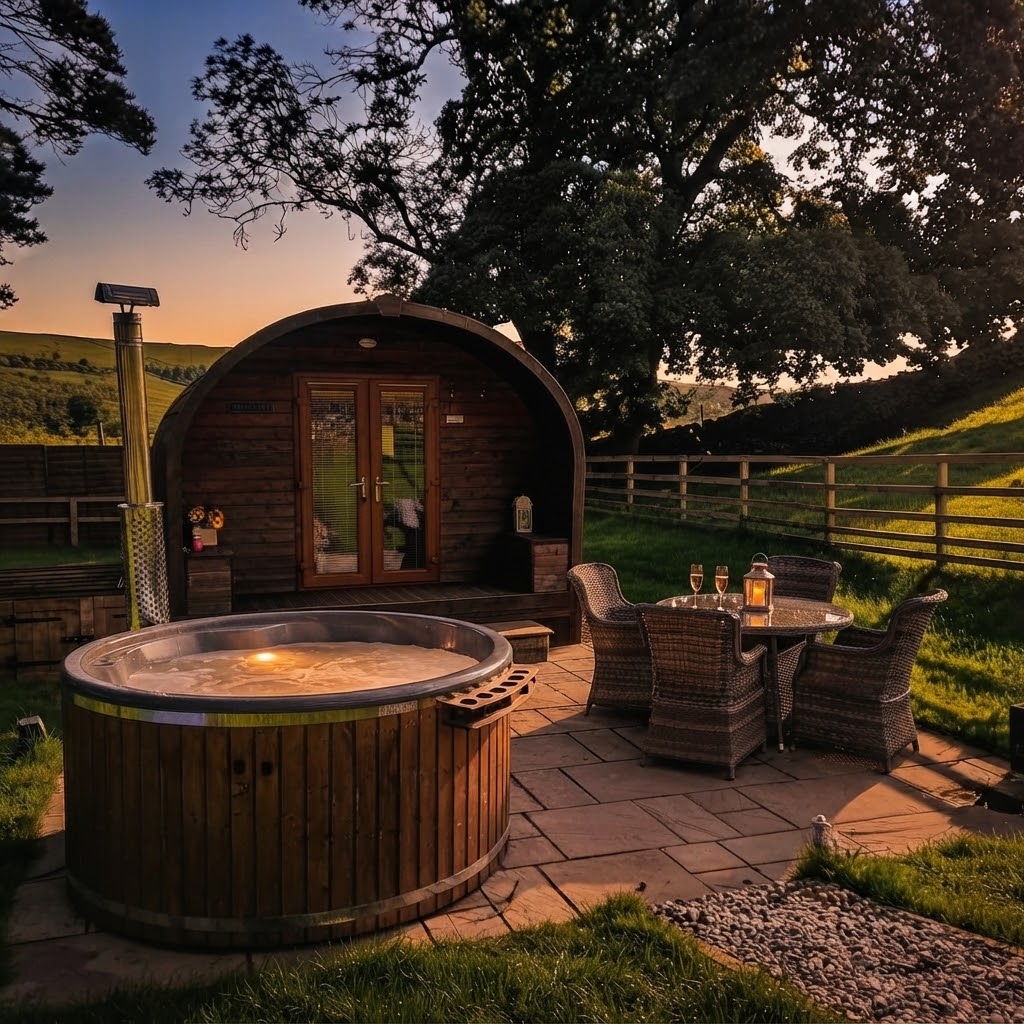
Hot tubs operate differently. They are the most requested amenity in Lake District glamping and the most seasonal in value. In late October, sitting in 38°C water watching cloud come over the fell is genuinely the highlight of the trip. In a warm August, you use it twice and wonder about the £90. Full treatment on our hot tub types page.
Comparing Glamping Pod Options
Two named operators illustrate how differently "glamping pods" can be delivered.
Carrock Glamping Pods sits in the northern part of the national park, in the country around Carrock Fell and the back o' Skiddaw. This is the quietest quarter of the Lakes: rough fell grazing, few visitors, big skies, and dark enough at night for real stargazing. The model is a small number of pods on farmland, with the fells starting at the gate. What you trade is amenity density — the nearest sizeable shops are in Penrith or Keswick.
Wallsend Guest House and Glamping Pods represents a different pattern: pods attached to an existing hospitality business. That structure changes the offer materially. There is a building, so there are staff, breakfast is often available, and someone is around if the heater fails. What you lose is isolation — you are in a yard or garden rather than a field.
| Farm-based pods (Carrock style) | Guest-house pods (Wallsend style) | |
|---|---|---|
| Setting | Open farmland or fellside | Garden, yard or paddock beside a building |
| Privacy | High | Moderate |
| Staff on site | Owner, sometimes elsewhere | Usually present |
| Breakfast | No | Often available |
| Dark skies | Excellent | Variable |
| Walk from the door | Straight onto the fell | Usually a short drive |
| Typical rate | £110–£200 | £95–£170 |
| Best for | Walkers, couples, stargazers | One-nighters, car-free trips, bad weather |
Reviews for the two models diverge predictably. Farm pods score high on setting and peace, low on facilities and signal. Guest-house pods score high on convenience and communication, lower on the sense of being away from things. Neither pattern is a fault; they are different products at similar prices.
Cost and Booking Information
Cost of Staying in Glamping Pods
Price range for Lake District glamping pods, two adults, one night:
| Tier | Jan–Mar | Apr–Jun | Jul–Aug | Sep–Dec |
|---|---|---|---|---|
| Basic camping pod | £65–£90 | £95–£125 | £125–£165 | £80–£120 |
| Standard pod, bed made up | £90–£115 | £125–£150 | £155–£200 | £105–£145 |
| En-suite pod | £120–£160 | £160–£200 | £200–£260 | £140–£190 |
| Luxury pod with hot tub | £175–£240 | £240–£300 | £300–£400 | £210–£280 |
The gap between a luxury pod and a standard camping pod is roughly £150 a night, which over five nights is £750 — a meaningful sum for a shower room and a tub. Whether that is good value depends entirely on the month and the reason for the trip.
Factors affecting pricing, ranked by how much they move the number:
- Season. Up to 45% swing between February and August.
- Private hot tub. £60–£110 a night.
- En-suite bathroom. £40–£80 a night.
- Weekend versus midweek. £20–£50 a night.
- Location. Windermere fringe commands 15–25% over the quiet valleys.
- Length of stay. Fourth and fifth nights are often discounted, quietly.
- Unit count on site. Fewer pods, higher rate.
Location matters less than people expect and amenities matter more. A pod with an en-suite and a tub in an unfashionable valley costs more than a basic pod on Windermere's doorstep.
Availability and Booking Process
Checking availability across a whole area is what platforms are good for. Confirming and negotiating is what direct contact is good for. Use both, in that order.
Platforms you will encounter, and what each is actually for:
- Large OTAs. Broad search, verified reviews, rigid terms. Good for seeing everything at once.
- Glamping-specific marketplaces. Better filters, better photography, curated inventory, commission in the rate.
- Short-let platforms. Patchy for glamping; listings are often mislabelled and cleaning fees distort comparison.
- Regional agencies. Cumbrian letting agents with glamping stock alongside cottages. Useful and often overlooked.
- The site's own website. Best rate flexibility, real calendar, direct human.
Securing peak-season dates:
- Book August in February. That is not an exaggeration.
- Be flexible on unit rather than site — the pod without the tub is often free when the tub pod is not.
- Take Sunday to Friday rather than Friday to Sunday. Cheaper and more available.
- Join two or three sites' mailing lists. Cancellations get announced there first.
- Ask to be told about gaps. Small owners keep informal waiting lists in their heads.
- Check late-availability pages seven to fourteen days out, where most cancellation deadlines fall.
Guest Experiences and Reviews
Guest Reviews and Ratings
Across Lake District pod reviews, the same themes recur regardless of operator.
What guests consistently praise:
- The setting, and how much better it looks than the photographs suggested
- Warmth — people are routinely surprised by how snug an insulated pod is
- Owners who are helpful about routes, weather and where to eat
- Hot tubs, unreservedly, whenever there is one
- Value against Lakeland hotels
What guests consistently complain about:
- Distance to shared facilities, especially at night and in rain
- Lack of storage. There is nowhere to put a suitcase, and there never will be
- Mobile signal, which in many valleys is absent rather than weak
- Wet-gear drying. Pods have no drying room and no radiator big enough
- Noise from neighbouring units on densely packed sites
- Access lanes that are narrow, unlit and steeper than expected
Comparing Carrock-style farm pods against Wallsend-style guest-house pods through review scores misleads, because reviewers grade against different expectations. Read the text rather than the number, and read the three-star entries first.
What reviews should change about your decision: whether you book the en-suite, whether you pick a site with fewer units, and whether you bring your own drying arrangements. What they should not change: your view of the scenery.
Booking Your Glamping Experience
Step by step:
- Set dates and season expectations. Check what the rate should be from the table above so you can recognise a bad deal.
- Decide the tier. En-suite or not is the fork that matters.
- Search on a platform to map availability across your chosen area.
- Open each shortlisted site's own website. Compare rate, minimum stay and terms.
- Email one specific question. Reply quality is the best available signal.
- Confirm the details in writing: occupancy, dogs, bedding, bathroom, tub, arrival window.
- Pay the deposit and diarise the balance date.
- Save arrival instructions offline before you lose signal in the valley.
Payment and cancellation, typical patterns:
- Deposit of 25–30% at booking, balance two to four weeks before arrival
- Full refund if cancelled outside 28 days, partial or none inside it
- Card payment normal; a few small sites still prefer bank transfer
- Damage deposits are rare for pods, common where a hot tub is involved
- Travel insurance is worth it here, because weather cancellations are not usually covered by the site
Offers worth watching for: midweek two-for-three-night deals in shoulder season, February and November flash discounts, and returning-guest rates that some small sites offer without advertising them. Ask. The worst outcome is that they say no.
Questions people ask
How much more does an ensuite glamping pod cost?
£40 to £80 a night over an equivalent pod with shared facilities. In practice it moves you from the £120–£160 band to the £160–£240 band. Whether that is worth it depends mostly on the weather and your age.
Do all Lake District glamping pods have hot tubs?
No, and most do not. Private hot tubs appear at a minority of sites, concentrated in the Eden Valley, the Lyth Valley and the Cartmel area. Filters on booking platforms overstate availability because shared tubs get tagged the same way.
What is the cheapest month for a Lake District glamping pod?
January and February, at roughly 45% below August rates. Pods are heated so it is perfectly comfortable; the limits are daylight, shorter pub hours and reduced site facilities.
Can I book a Lake District pod for one night?
Out of season, often. In July and August, almost never — two nights minimum is standard and three over bank holidays. Ringing the owner directly is the only reliable way to find a single-night gap.
Are pod deposits refundable?
Varies widely. A common pattern is a 25–30% deposit that is non-refundable inside a set window, with the balance due two to four weeks before arrival. Read the terms before paying; Cumbrian weather makes cancellation flexibility genuinely valuable.