Pods, in detail
Discover Glamping Pods in the Lake District for Your Next Getaway
Pods are the default Lakeland glamping choice, and the range hidden under that one word is enormous. Here is how they work, where they cluster, and what to check before you pay.
TL;DR
- A glamping pod is an insulated curved timber cabin, usually 3m by 5m, sleeping two to four, with mains power and a heater.
- Four tiers exist: basic (£95–£125), standard (£125–£160), en-suite (£160–£240), luxury with tub (£240–£400).
- Supply concentrates around Keswick, Ullswater, the Windermere fringe, the Eden Valley and the Lyth Valley.
- Book by February for August. One week ahead works fine for February.
- Read the amenity list, not the photographs. Bed made up and bathroom private are the two questions that matter.
Understanding Glamping Pods
What Are Glamping Pods?
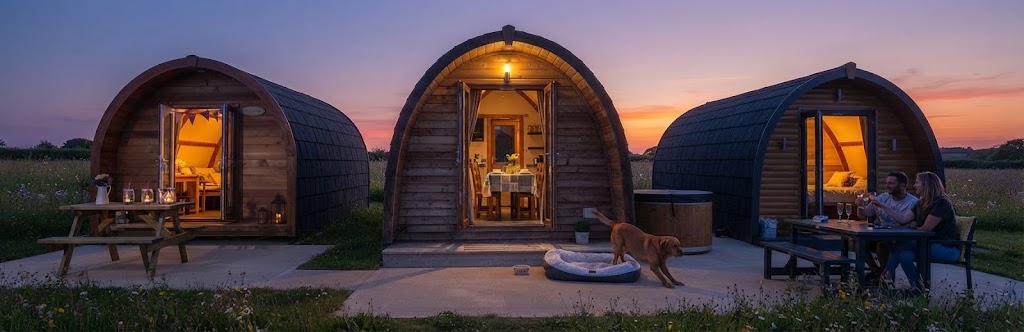
A glamping pod is a small insulated cabin with a curved roof, built from timber, usually measuring around 3 metres by 5 metres. The arched profile is structural rather than decorative: it sheds rain, resists wind and eliminates the corners where water would otherwise sit. In a county where Seathwaite records roughly 3,300mm of rainfall a year, that shape is the whole reason pods took over.
Construction is normally a laminated timber frame with rigid or sheep's-wool insulation, clad in larch or cedar, roofed in shingles or EPDM. Inside you get a floor, a bed platform, sockets, lights and a heater. Everything above that is the operator's choice.
Set against traditional camping, the pod removes the four things that spoil a wet Lakeland weekend: pitching, groundsheet condensation, cold, and packing away a soaking tent. Set against unique holiday cottages, the pod loses on space, storage, a bath and a kitchen, and wins on price, location and the fact that you are twenty seconds from being outdoors.
| Tent pitch | Glamping pod | Holiday cottage | |
|---|---|---|---|
| Nightly cost, two adults | £20–£35 | £95–£240 | £140–£300 |
| Minimum stay | 1 night | 2 nights in season | Often 3 nights |
| Floor space | What you brought | 12–18m² | 50–120m² |
| Heat | None | Electric or wood | Central heating |
| Kitchen | Camp stove | Kettle to kitchenette | Full |
| Setup on arrival | 40 minutes | Unlock and unpack | Unlock and unpack |
| Outdoors factor | Total | High | Moderate |
Comfort inside a pod comes down to the tier you book. The gap between the bottom and the top of the pod market is wider than the gap between a pod and a cottage.
Exploring the Lake District
Where to Find Glamping Pods in the Lake District
Pod supply is not evenly spread. It follows farmland, road access and planning permissions, which means the western valleys are thin and the south and east are thick.
| Area | Pod density | Nearby | Typical rate | Suits |
|---|---|---|---|---|
| Keswick & Borrowdale | High | Derwentwater, Skiddaw, Catbells, Castlerigg | £95–£175 | Walkers, families, first visits |
| Ullswater & Pooley Bridge | High | Aira Force, Helvellyn, the steamer | £120–£220 | Couples, swimmers, quieter trips |
| Windermere fringe | High | Lake cruises, Orrest Head, Bowness | £140–£260 | Car-free trips, restaurants |
| Eden Valley & Penrith | Moderate | Lowther Castle, the Pennines, M6 | £140–£280 | Hot tub stays, dry weather |
| Lyth & Winster valleys | Moderate | Damson orchards, Scout Scar, Kendal | £120–£230 | Genuine quiet, hidden gems |
| Coniston & Grizedale | Moderate | Old Man of Coniston, forest bike trails | £110–£190 | Cyclists, families |
| Wasdale & Ennerdale | Low | Scafell Pike, Wast Water | £100–£160 | Serious walkers only |
Choosing a location is mostly about honesty regarding driving. Cumbrian roads are slow: Kirkstone Pass, the Whinlatter road and the Hardknott are all beautiful and none of them are quick. If your plan involves a different valley every day, you will spend a third of the holiday in the car.
Our advice, plainly: for a two or three-night trip, book within walking distance of your main objective. For a week, take the quieter and cheaper valley and accept some driving. The locations section breaks each area down.
Planning Your Stay
Checking Availability and Booking
Availability behaves in a pattern. School holidays vanish first, then summer weekends, then May and September weekends. Midweek nights outside peak stay open until surprisingly late.
How to check properly:
- Start on an aggregator to see the shape of what is free across a whole area in one screen.
- Switch to the site's own website for the real calendar. Owners often hold back inventory from platforms.
- Ring if you are inside three weeks. Gaps that exist in the owner's head are not always in the online calendar.
- Check the minimum stay before you fall in love. Two nights is standard in season, three over bank holidays.
- Note the changeover day. Some sites run Friday-to-Monday and Monday-to-Friday blocks and nothing else.
Early booking matters more here than in most accommodation markets, because supply per site is tiny. A farm with three pods sells out with three bookings. There is no equivalent of a hotel finding you a room.
A step-by-step booking sequence:
- Fix dates, then decide on the hot tub, then set your budget band.
- Choose one area from the table above.
- Shortlist three sites and read their own pages properly.
- Email a specific question. Judge the reply speed and tone.
- Check the deposit, the balance date and the cancellation window.
- Book direct. Ask about early arrival, firewood and dog numbers in the same message.
- Save the arrival instructions offline. Mobile signal in Cumbrian valleys is patchy to nonexistent.
Budgeting for Your Glamping Experience
Typical costs for a glamping pod, two adults, one night:
- Basic pod, shared facilities, bring bedding: £95–£125
- Standard pod, bed made up, shared facilities: £125–£160
- En-suite pod with kitchenette: £160–£240
- Luxury pod with private hot tub: £240–£400
Factors that move the number, in order of impact: season, private hot tub, en-suite bathroom, weekend versus midweek, and length of stay. A pod that costs £110 on a Tuesday in March asks £215 on a Saturday in August. Same pod.
Budgeting tactics that genuinely work:
- Travel midweek. The saving is £20 to £50 a night for identical accommodation.
- Take late September rather than late August. Water is still warm, rates fall about 20%.
- Skip the hot tub and put the £80 into a good dinner and a boat trip.
- Bring your own bedding where the site allows it. Saves £15 to £30 per person.
- Ask about the fourth and fifth night. Many sites discount them without advertising it.
- Shop once at a supermarket in Penrith, Kendal or Keswick rather than daily at village shops.
Do not forget the extras: dog fee £8–£15 per night, firewood £8–£12 a net, bedding hire if applicable, and occasionally a separate hot tub charge. Budget an extra £25 to £40 a night beyond the headline rate and you will not be surprised. The cheap glamping page goes further on cutting costs.
Enhancing Your Glamping Experience
Amenities Offered by Glamping Pods
Common amenities, roughly in order of how often they appear:
- Double bed, LED lighting, two to four sockets
- Electric panel heater or oil-filled radiator
- Small table, two chairs, coat hooks, shelving
- Outside: picnic bench, fire pit or barbecue, a bin
- Kettle, fridge and microwave — standard tier upwards
- En-suite shower room and WC — en-suite tier upwards
- Induction hob, sink, crockery — en-suite and luxury tiers
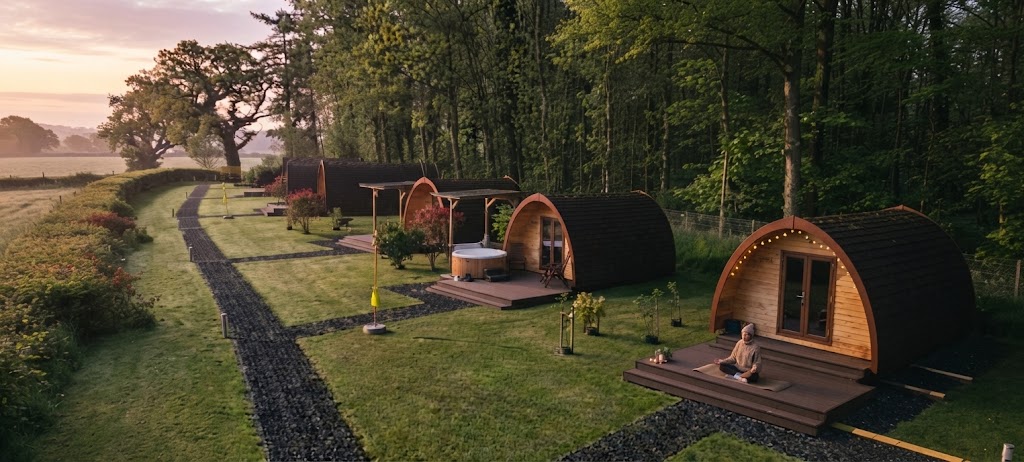
- Private hot tub, underfloor heating, smart TV, coffee machine — luxury tier only
Against unique holiday cottages, pods lose comprehensively on kitchen, storage, bathroom and space. A cottage has a washing machine and a sofa. A pod has neither. What pods win is siting: a cottage sits in a village, a pod sits in a field with a view a cottage could never get planning permission for. And a pod at £140 undercuts most Lakeland cottages, which frequently insist on three nights.
Luxury pod features worth the money, if you can find them: en-suite with a decent shower rather than a trickle, a fridge big enough for two days of food, a covered porch, blackout blinds, and a hot tub that is genuinely private rather than screened by a fence panel. Features rarely worth the money: televisions, dishwashers, and anything described as a "media wall".
Activities to Enjoy in the Lake District
Outdoor activities, from a pod base:
- Hiking. Catbells for the best two hours, Helvellyn via Striding Edge for the drama, Scafell Pike at 978m for the tick, the Old Man of Coniston for the mine workings.
- Boating. Windermere Lake Cruises, Ullswater Steamers, Coniston's gondola. Rowing boats and paddleboards for hire on most of the larger waters.
- Cycling. Grizedale and Whinlatter for waymarked mountain-bike trails, the quiet lanes of the Lyth Valley for road riding.
- Swimming. Crummock Water, Derwentwater at Calfclose Bay, Rydal Water.
- Climbing and scrambling. Langdale for both. Stickle Ghyll if you want to get soaked deliberately.
Cultural and historical stops, when the weather closes in:
- Dove Cottage and the Wordsworth Museum, Grasmere
- Hill Top, Beatrix Potter's farm at Near Sawrey, run by the National Trust
- Brantwood, John Ruskin's house above Coniston Water
- Castlerigg stone circle near Keswick, free, and better at dawn
- Blackwell, the Arts and Crafts house above Bowness
- Lowther Castle and Gardens near Penrith
For a relaxing getaway rather than a route march: pick one activity a day, book a pod with a covered outdoor space, buy food for two days at once, and accept that one afternoon will be spent watching rain from inside. That afternoon is often the best part.
Making the Most of Your Stay
Reading Reviews and Gathering Insights
Reviews are the closest thing to due diligence available before you book, and they need reading selectively.
Read them for: cleanliness of shared facilities, owner responsiveness, noise from roads or neighbours, whether the heating and hot water worked, and accuracy of the listing. Those things repeat.
Discount them for: the view, the weather, whether it felt romantic, and value judgements from someone who paid a different rate in a different month.
Trusted sources, with their biases:
- Google reviews. Highest volume, least filtered, best for spotting operational patterns.
- The site's own page. Curated, obviously, but useful for photographs of the actual unit rather than a stock pod.
- Booking platforms. Verified stays, which matters. Scores compress towards the top though.
- Walking and outdoor forums. Small samples, high honesty, good on the things walkers care about.
Interpretation rules we use. Sort by newest, because ownership changes. Weight sample size above score. Read the three-star reviews first. And treat a defensive owner response as more informative than the complaint that triggered it.
Finalizing Your Booking and Check-Out Process
Before you confirm, run this checklist:
- Dates, nights and changeover day correct
- Number of adults, children and dogs declared
- Bed made up, or bedding arrangements understood
- Bathroom arrangement confirmed in writing
- Hot tub private or shared, and how it is heated
- Arrival window and key or code collection method
- Parking location and distance from the unit
- Cooking rules and whether there is covered outdoor space
- Deposit amount, balance date, cancellation window
- Arrival instructions saved offline
Check-out at Lakeland glamping sites is typically 10am, sometimes 10.30am, and earlier than most hotels because pods need cleaning and drying between guests. What sites usually ask:
- Strip the bed, or leave linen in a pile, as instructed
- Wash up and put crockery back
- Bag rubbish and use the recycling points
- Empty the fire pit ash into the designated bin, not the hedge
- Return keys to the box, or wherever the owner said
- Leave the heater off and windows shut
For a smooth departure: pack the night before, put wet gear in a bag rather than on the bed, do the washing up after dinner rather than at 9.40am, and take a photo of the pod before you leave. It has resolved more than one deposit conversation.
Questions people ask
What is a stargazing pod?
A pod with a glazed gable end, roof light or transparent panel positioned so you can see the sky from the bed. The Lake District has genuinely dark skies in the northern and western valleys, so the feature is not just marketing. Ask which direction it faces before you get excited — some point at a hedge.
Do glamping pods have toilets inside?
The en-suite tier does. Basic and standard pods do not, and you use a shared amenity block. The word "facilities" in a listing usually means shared. Look for "en-suite" or "private bathroom" as explicit terms.
How many people fit in a Lake District glamping pod?
Two comfortably. Four if two of them are children and everyone likes each other. Family pods and mega pods exist at 4m by 6m and genuinely sleep four adults, but they are a minority of the stock and priced accordingly.
Can you cook inside a glamping pod?
Sometimes, and the restriction is fire safety rather than fussiness. Many sites ban gas stoves and open flames inside, supply a microwave and kettle instead, and provide a covered outdoor cooking area. Check before you plan meals.
Are glamping pods warm in winter?
Yes, if insulated and heated, which most are. A 3m by 5m pod with 100mm of insulation and a 1kW panel heater warms up in twenty minutes. The cold part of a winter pod stay is the walk to the shower block, not the pod.