Hot tub glamping
Experience Luxurious Glamping in the Lake District with Hot Tubs
The most requested amenity in Lakeland glamping, examined without the marketing. Which sites have them, what the two types actually feel like, and what the upgrade really costs.
TL;DR
- A private hot tub adds £60–£110 a night. It is the single largest price lever in Lake District glamping.
- Wood-fired tubs: slow, quiet, no chemicals, two to three hours to heat. Electric: instant, jetted, chemically dosed.
- Hot tub sites cluster in the Eden Valley, the Lyth Valley, Cartmel and the Windermere fringe.
- Check whether the tub is private or on a shared rota. Listings routinely blur this.
- Best value months for a tub: October to April. In warm August you will use it twice.
Exploring Glamping Options in the Lake District
Top Glamping Sites to Consider
Glamping in the Lake District spreads across several hundred small operations inside a national park of 2,362 square kilometres. Hot tub provision is not spread evenly. It concentrates where land is plentiful, drainage is workable and units can be spaced far enough apart that a tub feels private.
The clusters worth knowing:
| Area | Tub density | Typical rate with tub | Why here |
|---|---|---|---|
| Eden Valley, near Penrith | High | £220–£320 | Space, drier weather, M6 access |
| Lyth & Winster valleys | High | £210–£300 | Quiet farmland, close to Kendal |
| Cartmel & Cartmel Fell | Moderate | £230–£340 | Affluent catchment, good food nearby |
| Windermere fringe | Moderate | £250–£400 | Highest demand in the park |
| Ullswater & Pooley Bridge | Moderate | £220–£330 | Views, steamer, walking access |
| Keswick & Borrowdale | Low | £190–£280 | Larger campsites, less land per unit |
| Wasdale & the west | Very low | — | Remote, few operators, walkers not spa-goers |
Two named operators frame the range. Eden Heights Glamping works the drier eastern side, in the Eden Valley near Penrith, where annual rainfall runs around 900 to 1,000mm against Borrowdale's 2,000mm and more. Small unit count, private tubs, decking, farmland views to the Pennines one way and the fells the other. Accessibility is unusually good for Lakeland glamping: mainline station, supermarket, and M6 junction 40 all within a few minutes.
Inside Out Camping and Glamping sits at the opposite end — canvas, shared facilities, fire pits, no spa. We include it here because it is the honest alternative: if the hot tub is the only reason you were considering the £300 tier, a bell tent at £110 plus a swim in Crummock Water is a genuinely competitive holiday.
Hot Tub Availability at Glamping Sites
Roughly one Lakeland glamping site in four offers a hot tub of some kind. That figure sounds low against the impression booking filters give, and the reason is that filters lump together three different things.
- Private tub, your decking. What everyone assumes they are booking. Screened, exclusive, yours for the stay.
- Private tub, shared area. Exclusive use, but positioned where other guests walk past. Common, and rarely mentioned.
- Shared tub on a rota. One tub, six pods, hour-long slots booked at reception. A completely different product at a similar price.
How to establish which you are getting: ask for a site plan, or ask the direct question — "is the tub exclusively ours for the whole stay, and can anyone else see into it?" A straight answer arrives quickly at good sites.
Booking options for hot tub access vary. Most sites bundle the tub into the nightly rate. A minority charge separately, typically £30 to £50 per stay, which they justify as covering the water and heating. A few require you to book a heating slot in advance so the tub is ready.
The benefits, honestly assessed:
- Recovery. Hot immersion after a long fell day does measurable work on tired muscles.
- Weather-proofing. The only outdoor activity that improves in rain.
- Season extension. It makes an April or October evening usable rather than something you retreat from.
- Stargazing. Lying in warm water under a dark Cumbrian sky is the single best thing about the whole arrangement.
- Occasion. If the trip is a birthday or anniversary, the tub is what the photographs will be of.
Understanding Hot Tub Options
Electric vs. Wood-fired Hot Tubs
These are different machines with different rituals, and the choice affects the evening more than people expect.
Wood-fired hot tubs are timber or fibreglass barrels heated by an integrated stove, either submerged inside the tub or mounted externally with a water jacket. No pump. No filtration in most designs. Water is drained and refilled between guests rather than chemically maintained. You feed the fire, the water climbs, and two to three hours later it is 38°C.
Electric hot tubs are the familiar acrylic spa: insulated shell, circulation pump, filter cartridge, heater element, jets, thermostat, insulated cover. The site maintains chlorine or bromine levels and tests daily. It is ready when you arrive.
| Wood-fired | Electric | |
|---|---|---|
| Ready when | 2–3 hours after lighting | On arrival |
| Jets | No | Yes, usually |
| Water treatment | Drained and refilled per guest | Filtered, chlorine or bromine |
| Smell | Woodsmoke | Faint chlorine |
| Noise | Crackling | Pump hum |
| Temperature control | By feel and firewood | Thermostat |
| Typical capacity | 4–6 | 4–6 |
| Nightly premium | £50–£80 | £70–£110 |
| Works in January | Yes, slower | Yes, easily |
| Best for | Two nights or more, atmosphere, autumn | One night, aching legs, families |
Where each turns up. Wood-fired tubs dominate at small farm sites, shepherd's hut retreats and eco-minded operations, because installation is cheap and there is no ongoing electricity cost. Electric tubs dominate at larger sites and anywhere marketing itself as luxury, because guests expect jets and instant heat, and because a thermostat is easier to defend if someone complains.
Our preference, for what it is worth: wood-fired, for two nights or more, in the second half of the year. The fire is half the point. But if you arrive at six after a long drive and want to be in water by twenty past, electric wins outright.
Luxury and Amenities in Glamping
Luxury Glamping Pods and Their Features
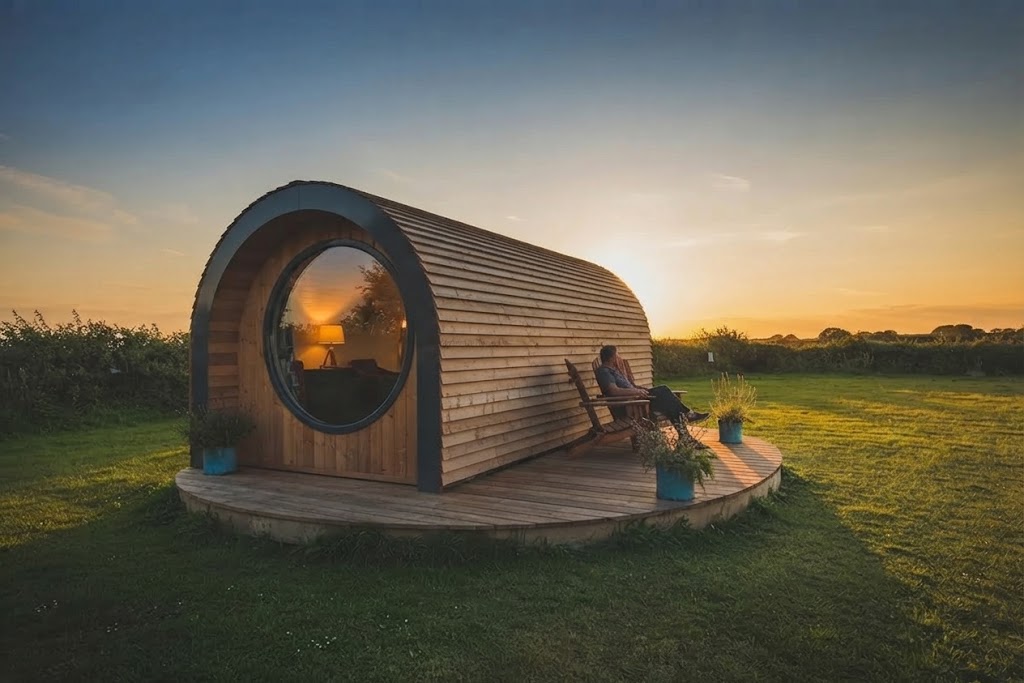
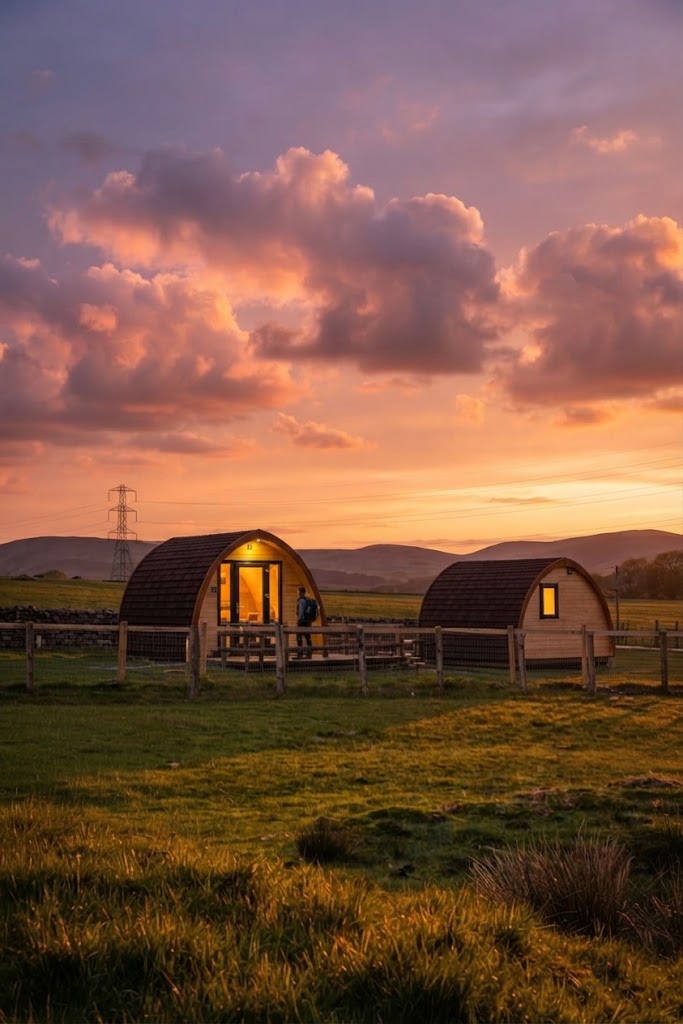
A luxury glamping pod is a specific tier rather than an adjective. In the Lake District market the defining combination is an en-suite bathroom plus a private hot tub, at £240 to £400 a night.
What else comes with it:
- King bed, made up, real linen, towels supplied
- En-suite shower room with a pump that produces actual pressure
- Kitchenette: induction hob, fridge, sink, crockery, sometimes an oven
- Thermostatic or underfloor heating rather than a panel heater
- Larger footprint, often 4m by 6m or a two-room layout
- Private decking with furniture designed for sitting rather than eating
- Screened hot tub, and outdoor lighting that works
- Sometimes a wood burner in addition to the electric heat
Sites offering this tier are concentrated in the Eden, Lyth and Winster valleys, around Cartmel, and on the eastern approaches to Windermere. They run one to four units on several acres, because the whole product depends on you not seeing anybody. A well-appointed pod on a thirty-unit campsite is not this, whatever the rate.
Worth it, or not? For a two-night occasion in October, unhesitatingly yes. For a week in August with two children, no — take a safari tent and buy floor space instead. More at luxury glamping in the Lake District.
Additional Amenities Offered
Inside Out Camping and Glamping is a useful counterpoint on amenities, because its offer is built on subtraction. Canvas structures, furnished with beds and simple furniture, shared shower and toilet facilities, fire pits, and a field arranged so people end up talking to each other.
What that provides that the luxury tier does not:
- A rate roughly a third of a tub pod
- Actual proximity to the outdoors — canvas transmits weather, birdsong and light
- Fire as the evening's centre, rather than a hot tub
- Sociability, which some people want and others flee
- Space, since bell tents and safari-style structures beat pods on floor area
What it does not provide: warmth in October, a private bathroom, a lockable door, or any prospect of a hot tub.
Against other providers, the comparison comes down to what you are buying. A tub site sells an evening. A canvas site sells a day outdoors. Both are defensible; only one of them costs £300.
Activities and Experiences in the Lake District
Lake Activities to Enjoy
Popular lake activities, and how they sit alongside a hot tub stay:
- Wild swimming. Crummock Water, Ullswater's eastern shore, Derwentwater at Calfclose Bay, Rydal Water. Cold water then hot water is a genuinely excellent sequence.
- Paddleboarding and kayaking. Hire is widespread on Windermere, Derwentwater, Coniston and Ullswater. Morning is calmest.
- Sailing. Windermere, Coniston and Bassenthwaite all have clubs and hire.
- Steamer trips. Ullswater Steamers and Windermere Lake Cruises both work as one-way transport for a linear walk.
- Fishing. Permits required and available locally; pike in Windermere, trout in the tarns.
- Ghyll scrambling. Stickle Ghyll in Langdale, Church Beck at Coniston. Guided is safer and more fun.
These pair with a hot tub in a specific and slightly unfair way: cold immersion in a glacial lake followed by 38°C water four hours later produces a physical wellbeing that is hard to argue with. It also makes the tub feel earned rather than indulgent.
Seasonal variation matters. Lake temperatures peak in mid-August at 16 to 19°C and bottom out around 5°C in February. Boat operators reduce or stop services from November. Paddleboard hire is essentially a May-to-September business. The hot tub, by contrast, is at its best exactly when the water sports stop.
Planning a Personalized Itinerary
Tips for building a trip around a hot tub stay:
- Put the hard walk on the day before a tub evening, not after it. Hot water and tired legs is the right order.
- If the tub is wood-fired, light it before you go out, or immediately on return. Do not plan to get in at nine and light it at eight.
- Keep one evening completely free. The tub takes longer than you think and rushing it defeats the point.
- Shop for the tub as well as the kitchen. Water, not just wine. Dehydration arrives fast at 38°C.
- Check the curfew and plan the evening around it. Most sites stop tub use at ten.
- Book the second half of September or early October if the tub is the main event.
Sites in the Eden Valley, Eden Heights among them, tend to recommend a pattern that reflects their geography: use the mornings for the fells via Ullswater or Keswick, use the afternoons for the quieter eastern attractions — Lowther Castle, the Eden Valley villages, Penrith's market — and keep the evenings at the site. It works, because the drive back east at five o'clock is against the traffic.
Reviews, Costs, and Booking Information
Reviews and Ratings of Glamping Sites
Hot tub glamping reviews follow a recognisable pattern, and the pattern is useful.
What guests praise, consistently:
- The tub itself. Almost nobody regrets it
- Privacy, when it is genuine
- Owners who left the fire laid and the instructions clear
- Views from the water, which is the thing people photograph
What guests complain about, consistently:
- The tub not being up to temperature on arrival, especially wood-fired
- Discovering the tub is shared, or visible from a path
- Extra charges that were not obvious at booking
- Curfews, which surprise people who did not read the terms
- Water quality at sites that dose rather than drain
Every one of those complaints is preventable by asking two questions before booking: is it private, and will it be hot when we arrive. Factors that most influence ratings are operational rather than physical — communication, cleanliness, and whether the site did what it said it would.
Cost and Booking Options
Price range for Lake District glamping with a hot tub, two adults, one night:
| Season | Pod with tub | Hut or lodge with tub | Notes |
|---|---|---|---|
| Jan–Mar | £175–£240 | £190–£270 | Best value of the year, and the tub matters most |
| Apr–Jun | £240–£300 | £250–£330 | Long evenings, driest months |
| Jul–Aug | £300–£400 | £320–£450 | Peak. Book by February |
| Sep–Dec | £210–£290 | £230–£320 | September is the sweet spot |
Booking platforms and options: use a marketplace to find which sites within your chosen valley have tubs, then go direct to confirm and negotiate. Direct booking is where you get the single night out of season, the early arrival so the fire can be lit, and the honest answer about how private the tub is.
Finding deals:
- Midweek in November or February. The tub tier drops as much as 45% from August.
- Watch the seven-to-fourteen-day cancellation window.
- Ask about the third and fourth night rather than the headline rate.
- Take a wood-fired tub over electric. It is usually £20–£30 a night cheaper and, in our view, nicer.
- Sign up to two or three small sites' mailing lists. Gaps get announced there first.
Related pages: hot tub sites and etiquette, tub types and Windermere, and last minute availability.
Questions people ask
How much does glamping with a hot tub cost in the Lake District?
£220 to £400 a night for two people in season, against £125 to £200 for the same accommodation without one. Out of season the tub tier drops to £175–£250, which is where the value is.
Is a wood-fired hot tub better than an electric one?
Nicer, not better. Wood-fired means a fire to tend, no chlorine smell and slow anticipation. Electric means jets and instant heat. For one night take electric. For three nights in autumn, wood-fired is the better ritual.
How long does a wood-fired hot tub take to heat up?
Two to three hours from cold, depending on ambient temperature and how well the stove is fed. Light it when you arrive, not when you want to get in. In January allow closer to three and a half.
Are glamping hot tubs safe and hygienic?
At well-run sites, yes. Wood-fired tubs are typically drained and refilled between guests. Electric tubs are filtered and chemically dosed, with readings taken daily. Ask which model applies; a site that answers precisely is a site that manages it properly.
Can children use hot tubs at glamping sites?
Usually, with supervision and often with a lower temperature and a time limit. Some adult-only sites obviously exclude them entirely. Public Health guidance suggests under-fives should not use hot tubs at all, and most operators follow it.
Is there a curfew on hot tub use?
Almost always. Ten or half past ten is standard, because sound carries a very long way in a quiet Cumbrian valley and the neighbouring pod is thirty metres away.